
Baeckea frutescens
Baeckea frutescens
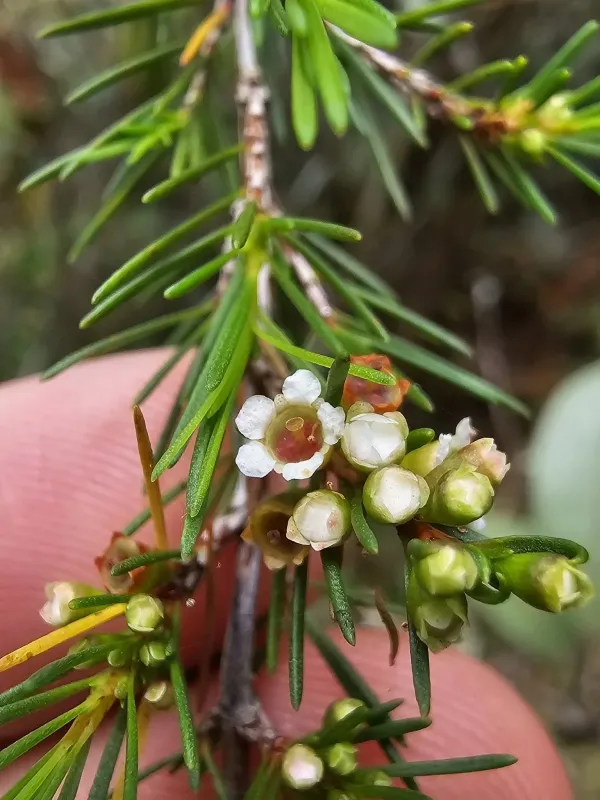
Description
Sowing dates
The propagation of Baeckea frutescens is typically performed via seed germination in controlled greenhouse conditions or through semi-hardwood cuttings.
Seeds require a fine, well-draining sowing substrate and constant moisture, with germination taking several weeks due to the species' specific ecological adaptation.
Cuttings are the most reliable method for agricultural production, ensuring uniformity in essential oil composition among the crop population.
Cuttings should be approximately 10 cm in length, treated with rooting hormones, and placed in a sand-based medium to prevent root pathogens.
Seedlings are transplanted to the field once the root system is well-developed, usually after a hardening-off period of several weeks in protected conditions.
Growing requirements
Baeckea frutescens is a versatile evergreen shrub from the Myrtaceae family, native to Southeast Asia, widely recognized for its high essential oil content.
The plant thrives in full sun exposure, which is critical for maximizing the secondary metabolites and oils responsible for its medicinal and commercial value.
It prefers acidic, sandy, or peaty soils that provide excellent drainage, as the species is highly susceptible to root rot in waterlogged or heavy clay environments.
Baeckea is not frost-tolerant and requires a stable, warm climate, making it ideal for tropical and subtropical agricultural zones without extreme seasonal shifts.
Regular but moderate watering is necessary; the plant tolerates short periods of drought but performs best with consistent soil moisture levels throughout the growing season.
Yield
This crop is primarily harvested for its essential oil, which is utilized in the cosmetic and pharmaceutical industries for its antibacterial and aromatic properties.
Yield efficiency is directly linked to biomass production, which can be significantly boosted by systematic pruning and proper nitrogen-potassium balanced fertilization.
Commercial harvesting is performed when the plants reach peak maturity, usually resulting in a substantial yield of leafy biomass per hectare of cultivation.
The distillation process requires fresh raw material to maximize the oil extraction rate, which typically ranges from 0.5% to 1.5% by weight.
Optimized plantation management allows for multiple harvests per year in warm climates, ensuring a consistent supply of raw material for the distillation unit.
Main diseases and pests
The primary threats to Baeckea frutescens include root and crown rot, primarily caused by fungal pathogens when soil drainage and aeration are inadequate.
Common pests like mealybugs, scale insects, and spider mites can infest the foliage, particularly under conditions of low air circulation or high humidity.
Nematode infestations in sandy soil can be a significant constraint on growth, requiring integrated pest management practices to maintain plant vigor.
Fungal leaf spot diseases can occur during prolonged monsoon seasons, necessitating the use of copper-based fungicides to prevent widespread defoliation.
Regular monitoring and rapid intervention are essential to prevent the spread of diseases, as the dense foliage of the shrub can hide early stages of pest activity.
Harvesting
Harvesting involves the mechanical or manual trimming of young stems and leaves, focusing on the current season's growth where oil concentration is highest.
The timing of harvest is critical; early morning collection ensures the highest concentration of volatile aromatic compounds before the heat of the day.
Post-harvest handling requires immediate processing, as the essential oil content can degrade rapidly if the cut biomass is stored improperly or allowed to ferment.
Drying is an alternative for storage but must be performed in shaded, well-ventilated areas to prevent the loss of volatile terpenes during the evaporation process.
Efficient plantation planning ensures that harvesting cycles do not stress the plant, allowing it to recover quickly for the next growth flush.