
Dorstenia psilurus
Dorstenia psilurus
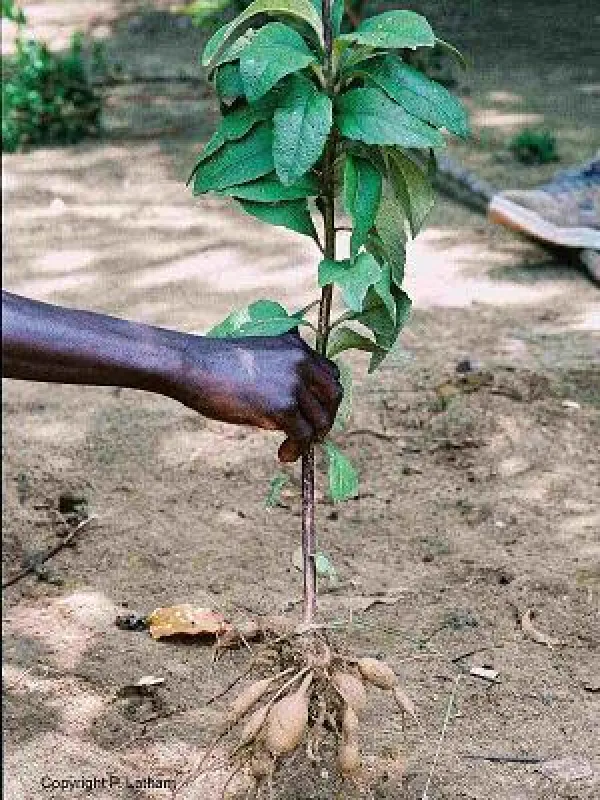
Description
Sowing dates
Propagation of Dorstenia psilurus is most successful through seeds or cuttings, requiring a warm environment to initiate active growth and root development.
Seeds should be sown in a well-draining, sterile substrate, ensuring that moisture is consistent but not excessive to prevent early decay of the seedlings.
A temperature range of 22–25 degrees Celsius is considered optimal for the germination process, usually facilitated by a covered container to maintain humidity.
Once seedlings emerge, they should be gradually acclimated to lower humidity levels, preparing them for transplanting into individual growing pots.
Cuttings should be taken from mature, healthy stems and allowed to callous over for a few days before being planted in a sandy, airy rooting medium.
Growing requirements
As a member of the Moraceae family, Dorstenia psilurus functions as a succulent-like plant, thriving best when provided with bright, indirect sunlight.
The choice of soil is crucial; a specialized mix for succulents containing perlite, pumice, and coco coir is ideal to ensure proper aeration for the root system.
Watering requires careful monitoring; the plant should only be watered when the substrate is significantly dry to avoid the risk of root rot.
The environmental temperature must remain stable, ideally between 20 and 28 degrees Celsius, as the species is sensitive to sudden cold drops and drafts.
While the plant is quite hardy in its native habitat, indoor cultivation requires consistent attention to light duration and humidity levels to maintain optimal health.
Main diseases and pests
Root rot is the most common threat to Dorstenia psilurus, usually caused by overwatering or using a soil mix with insufficient drainage capabilities.
Pests such as spider mites and mealybugs can infest the plant, particularly if the surrounding air is kept too dry for an extended period.
Regular visual inspections are essential, focusing on the undersides of the leaves and the base of the stem where mealybugs often congregate.
Fungal issues may arise if the plant is exposed to poor air circulation, necessitating improved ventilation and immediate isolation of affected specimens.
The use of balanced insecticides and fungicides is recommended if infestations or infections are detected, always following the label guidelines for safe application.