
Dorstenia indica
Dorstenia indica
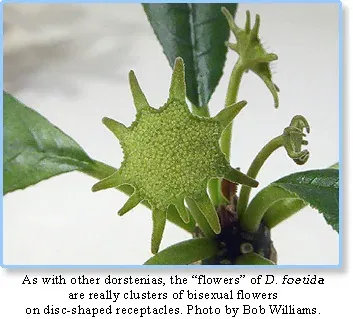
Description
Growing requirements
Dorstenia indica belongs to the Moraceae family. It is a herbaceous plant native to the tropical forests of India, where it typically grows in humid, shaded environments as part of the undergrowth.
This culture requires stable ambient temperatures, ideally between 20 and 25 degrees Celsius. It is highly sensitive to cold drafts and rapid temperature fluctuations, which can trigger leaf drop and stunted growth.
The substrate must be light, well-draining, and rich in organic matter. A mixture of leaf mold, peat, and coarse sand provides the necessary aeration for the root system to prevent waterlogging.
Light requirements involve bright, indirect light. While the plant appreciates good light levels for photosynthesis, it must be protected from intense noon sunlight to avoid tissue necrosis.
Watering should be balanced, allowing the top centimeter of the soil to dry out before the next irrigation. During the dormant season, the plant requires significantly less water to maintain its health.
Main diseases and pests
Root rot is the most common physiological threat, often caused by poor drainage or overwatering. Maintaining the correct moisture balance is crucial for plant longevity.
Common pests include spider mites, which thrive in dry indoor environments. They feed on cell sap, leading to the yellowing and eventual wilting of foliage.
Mealybugs are another prevalent concern. They appear as small, white cotton-like clusters, typically found in leaf axils or along the stems, weakening the plant by sucking nutrients.
To control these pests, one should use systemic insecticides or neem-based solutions. Physical removal with an alcohol-dipped swab is also effective for minor infestations.
Preventive measures include regular inspection of foliage, providing proper ventilation, and ensuring that the plant is not overcrowded, which helps reduce the risk of outbreaks.