
Dorstenia hildebrandtii
Dorstenia hildebrandtii
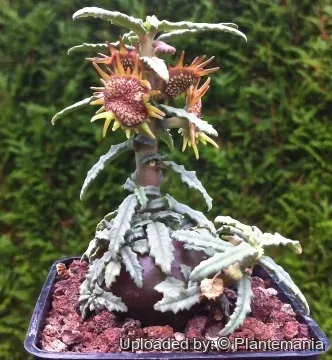
Description
Growing requirements
Dorstenia hildebrandtii belongs to the Moraceae family and is recognized as a distinctive succulent species native to the tropical forests of East Africa.
The plant thrives in regions where shade and consistent moisture are available, requiring similar environmental conditions in a controlled or greenhouse cultivation setting.
It demands bright, indirect sunlight to maintain its vibrant leaf color and overall structural integrity, as direct exposure often causes irreparable foliage damage.
Optimal growth is achieved in a well-draining soil mix that prevents water accumulation, typically involving a combination of peat, sand, and perlite components.
Temperature management is critical; the species performs best in temperatures ranging from 20 to 26 degrees Celsius and requires protection from extreme cold or heat spikes.
Main diseases and pests
The primary concern for Dorstenia hildebrandtii cultivation is root rot, which typically stems from poor soil aeration and excessive watering cycles.
Pests such as spider mites, mealybugs, and scale insects frequently target the plant, especially in low-humidity environments that favor their rapid development.
Regular sanitation measures and consistent inspection of the undersides of the leaves are essential for early detection and control of potential infestation.
Chemical control should be applied carefully; it is highly recommended to use mild, soap-based solutions or targeted horticultural oils for initial pest suppression.
If fungal infections occur, the affected plant should be immediately isolated, the substrate replaced, and the roots treated with appropriate broad-spectrum fungicides.