
Dorstenia gigas
Dorstenia gigas
Description
Growing requirements
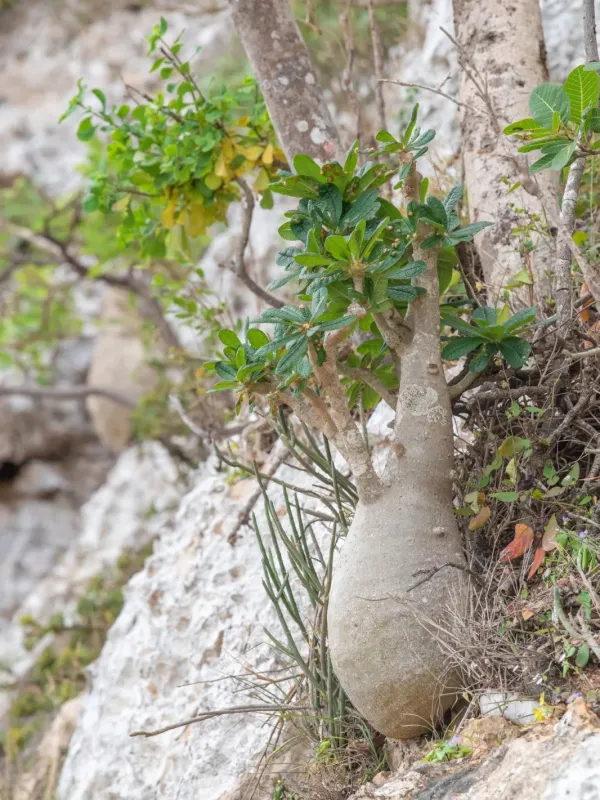
Dorstenia gigas is a unique succulent species belonging to the Moraceae family. Native to the island of Socotra, it is highly valued for its striking, bottle-shaped caudex that acts as a water storage organ during prolonged periods of drought.
Cultivation requires conditions that closely mirror its arid natural habitat. The plant thrives in bright, filtered light. While it tolerates sun, it is prone to tissue sunburn, especially when relocated from shaded greenhouse environments to direct outdoor light.
Soil requirements are strict regarding drainage. A highly porous, mineral-heavy substrate is mandatory. Growers often use a mix of coarse pumice, expanded clay, and lava rock, ensuring that moisture never accumulates around the root crown.
Climate needs involve a tropical temperature range, ideally between 22 and 28 degrees Celsius. During the winter dormancy period, temperatures should not drop below 15 degrees Celsius. Cold exposure combined with moisture is lethal to this species.
Watering must be approached with extreme caution. As a succulent, it requires a "soak and dry" cycle. During the active growth season, water should be applied only when the soil medium is entirely desiccated to prevent root rot.
Main diseases and pests
The primary threat to Dorstenia gigas is root and caudex rot caused by overwatering or poor substrate aeration. Once the caudex begins to soften due to decay, the condition is often irreversible, necessitating immediate surgery to remove infected areas.
Insect pests include spider mites and mealybugs. These organisms congregate in the crevices of the caudex and at the base of the leaves, drawing sap and weakening the plant's structural integrity over time.
Control measures involve frequent monitoring and the application of systemic insecticides. However, due to the plant's sensitivity to chemical compounds, spot-treating with mild solutions is preferred over heavy spraying.
Fungal infections can develop due to insufficient airflow. Proper ventilation is essential for maintaining the health of the succulent, particularly in high-humidity climates where moisture tends to linger on the plant's surface.
Prevention is the best strategy against all threats. Maintaining strict hygiene with pruning tools and ensuring that the plant is never allowed to sit in standing water effectively minimizes the risk of pathogens gaining a foothold.