
Dorstenia barnimiana
Dorstenia barnimiana
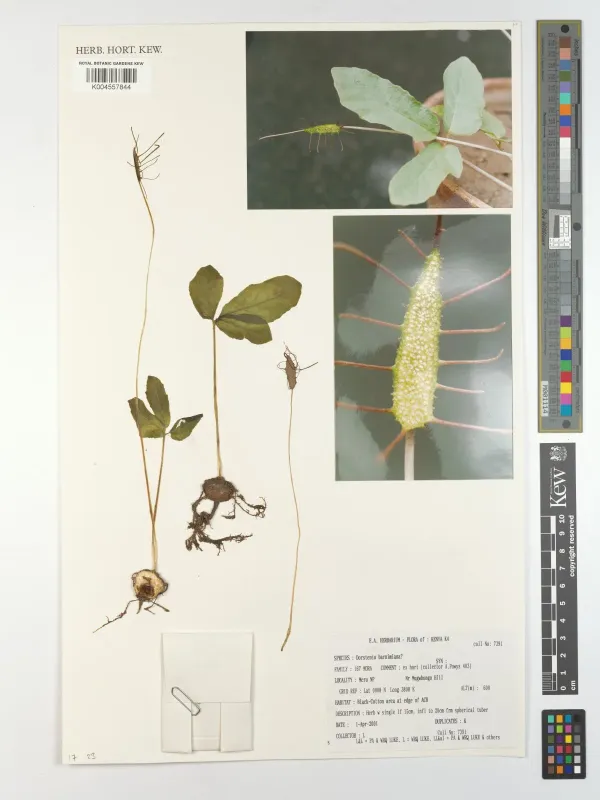
Description
Growing requirements
Dorstenia barnimiana is a member of the Moraceae family, recognized for its fascinating caudiciform growth habit. Native to East Africa, it has evolved to survive in arid, rocky environments by storing nutrients and water in its underground tuberous stem.
The plant requires a well-draining substrate to thrive. A mixture containing coarse sand, perlite, and a modest amount of organic humus is recommended to replicate its natural rocky habitat and prevent water retention around the roots.
Lighting requirements are specific: the plant prefers bright, indirect light. Direct sunlight can scorch the foliage, while insufficient light leads to etiolation, making the stems weak and prone to collapse under their own weight.
Temperature management is vital, with an ideal growing range between 20°C and 28°C. Being a tropical species, it does not tolerate frost and should be kept in a warm environment throughout the year to ensure metabolic stability.
Watering should be conducted with caution. During the active growth phase, allow the substrate to dry out significantly before applying moisture. During the dormant period, watering must be drastically reduced to avoid winter-season rot.
Main diseases and pests
The most significant threat to Dorstenia barnimiana is root rot caused by overwatering. The plant's caudex is highly susceptible to fungal pathogens if the soil remains damp for extended periods, leading to rapid decay of the vascular tissues.
Pests such as spider mites are particularly problematic in low-humidity environments. These mites feed on the sap of the leaves, causing discoloration and eventual leaf drop, which weakens the plant significantly if left untreated.
Mealybugs are another common threat, often settling in the junctions between leaves or around the peculiar disk-shaped inflorescences. Manual removal or the application of specialized systemic insecticides is necessary to manage these infestations effectively.
Fungal leaf spot diseases can occur if the foliage is sprayed with water or if the air circulation is inadequate. Proper spacing between plants and maintaining good ventilation around the canopy is essential to mitigate these risks.
The plant requires consistent monitoring for physiological stress. Any signs of softening at the base of the plant should be treated as an emergency, often requiring soil replacement and the removal of compromised root tissues to save the specimen.