
Dorstenia africana
Dorstenia africana
Description
Growing requirements
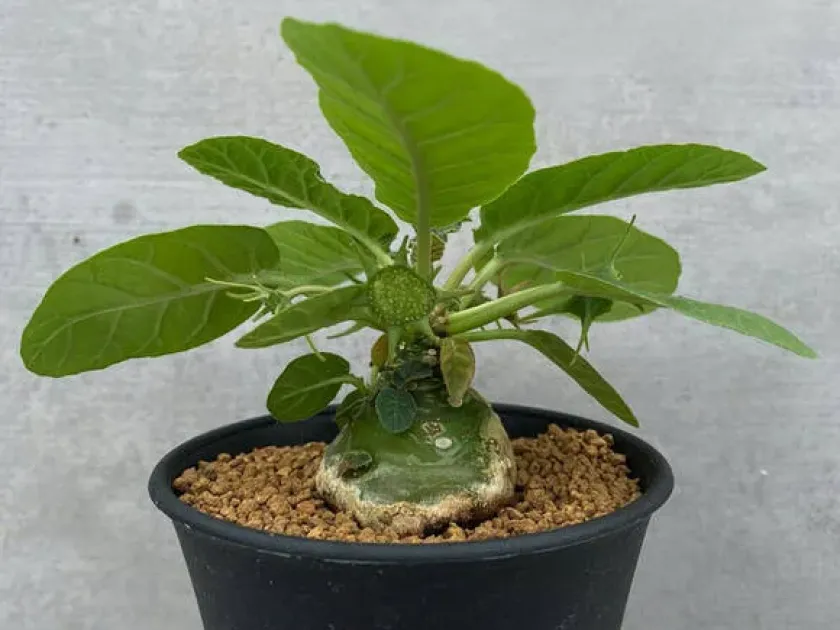
Dorstenia africana is a fascinating member of the Moraceae family, native to the tropical regions of Africa. Unlike many other succulents, it possesses distinct botanical characteristics, including unique inflorescences known as coenanthia, which are typical for the genus Dorstenia.
To thrive, this plant requires bright, filtered light. Exposure to direct intense sunlight can easily scorch the succulent stems and foliage, leading to unsightly damage. Providing a location with morning sun or dappled light is the best strategy for healthy vegetative growth.
The ideal temperature range for Dorstenia africana is between 20°C and 25°C. It is a thermophilic plant that suffers significantly if temperatures drop below 15°C. Protecting the plant from cold drafts near windows during winter is essential for its long-term survival.
Soil composition must prioritize drainage. A professional potting mix formulated for succulents or cacti, enriched with perlite or coarse sand, ensures that excess water drains away quickly. A pot with adequate drainage holes is mandatory to maintain a healthy root environment.
Watering practices should follow the cycle of the plant's growth. During the active growing season, water thoroughly when the top layer of soil becomes dry to the touch. During the dormant winter period, watering frequency should be strictly reduced to prevent rotting.
Main diseases and pests
Root rot is the most common health issue caused by overwatering or poor soil drainage. When the roots remain wet for too long, they lose the ability to transport oxygen and nutrients, leading to rapid decay of the entire stem base. Prompt action and repotting are necessary for recovery.
Pests like spider mites and mealybugs can infest the plant, especially in low-humidity indoor environments. These insects hide in leaf axils and crevices. Regular monitoring and, if necessary, the application of horticultural oils or systemic insecticides are recommended to maintain plant health.