
Siebold's magnolia
Magnolia sieboldii K. Koch
Description
Growing requirements
Siebold's magnolia (Magnolia sieboldii) is a deciduous shrub or small tree belonging to the Magnoliaceae family, native to the forest regions of East Asia.
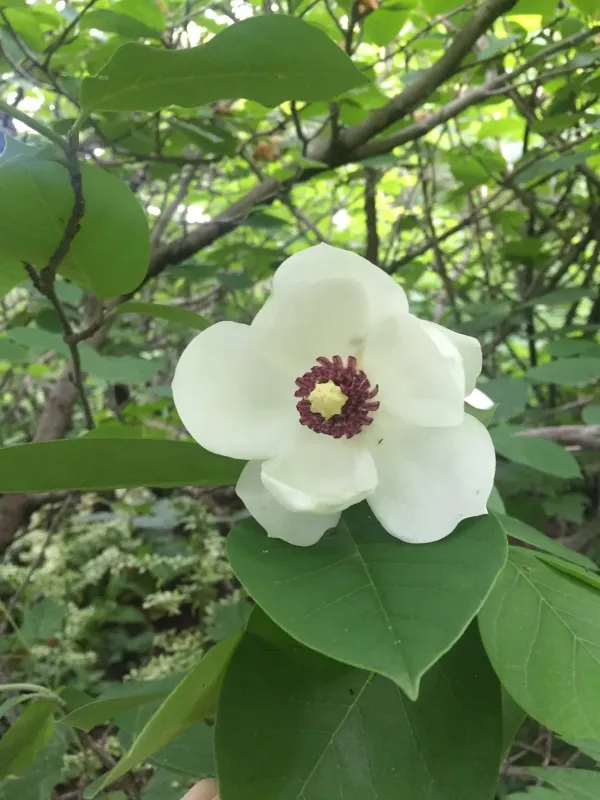
The plant is highly prized in horticulture for its distinct cup-shaped white flowers with striking crimson stamens that provide a pleasant fragrance during the summer months.
Optimal growth conditions include a sheltered location with partial shade, as this species prefers protection from harsh afternoon sunlight which can scorch the foliage.
The soil should be nutrient-rich, moist, and well-drained, ideally with a slightly acidic profile to support the plant's nutritional uptake and overall health.
This variety is known for its relatively high cold tolerance, making it a popular choice for gardeners in temperate zones who desire an exotic look in their landscapes.
Main diseases and pests
Susceptibility to fungal issues such as powdery mildew and root rot is a common challenge, especially in environments with poor drainage or excessive soil moisture.
Pests including scale insects and spider mites are known to target Siebold's magnolia, potentially causing foliage yellowing and decreased vigor if left untreated.
Maintaining a clean garden environment and removing debris from the base of the plant helps to reduce the survival rate of pathogens and harmful insect larvae.
Early intervention with horticultural oils or approved fungicides is recommended at the first sign of pest activity to prevent widespread damage to the shrub's structure.
Proper nutritional management, avoiding excessive alkalinity in the soil, is crucial to prevent chlorosis and ensure the plant maintains its robust immunity against attacks.