
Beilschmiedia zenkeri
Beilschmiedia zenkeri
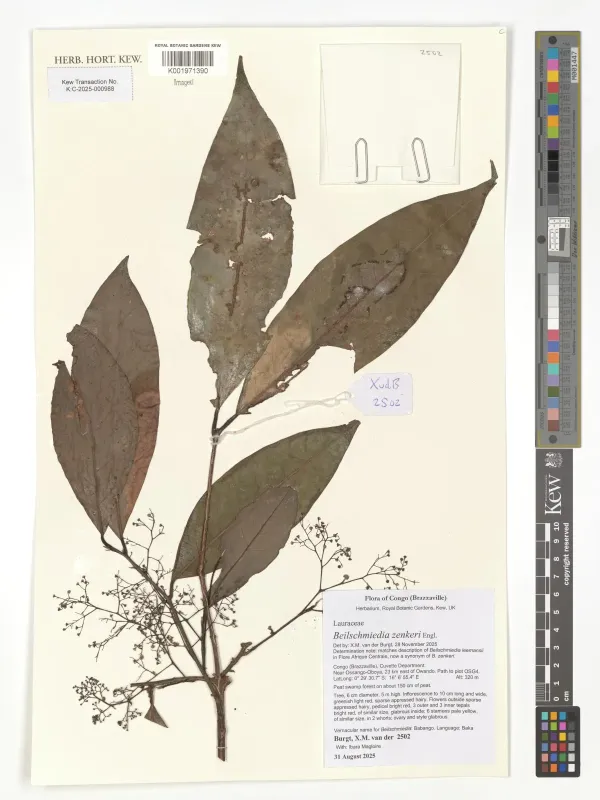
Description
Growing requirements
Beilschmiedia zenkeri is a distinctive species within the Lauraceae family, native to the lush tropical rainforests of Central and West Africa. As a tropical evergreen tree, it thrives in environments characterized by high humidity and consistent warmth.
The plant requires deep, fertile soils that provide excellent drainage, as it is particularly sensitive to waterlogging. It is typically found in primary forest regions where the canopy provides the necessary protection for young trees during their early development.
Climatic conditions for this culture demand minimal temperature fluctuation throughout the year. The species is highly adapted to the stable microclimate of equatorial forest ecosystems, which influences its physiological growth patterns.
Botanically, Beilschmiedia zenkeri features dense, coriaceous foliage that is essential for water retention in high-evaporation environments. The trunk structure is robust, reflecting its evolution as a long-lived forest giant.
In terms of economic value, the tree is highly sought after for its hard, durable wood, which possesses a fine grain and excellent structural integrity. These qualities make it an ideal choice for specialty furniture and high-end joinery.
Harvesting
Harvesting Beilschmiedia zenkeri requires a long-term strategic approach due to the tree's slow maturation rate. Industrial exploitation must be balanced with conservation efforts to ensure the survival of the species in the wild.
Timber extraction processes focus on selective logging, which minimizes the disturbance to the surrounding forest habitat. Once felled, the timber undergoes a systematic seasoning process to prevent warping and degradation.
Seed collection is essential for silvicultural projects aimed at reforestation. Experts emphasize the importance of collecting seeds from mature trees to ensure genetic diversity and strong offspring.
Agrotechnical management includes maintaining appropriate canopy cover in managed forest plots to ensure that seedlings have the necessary protection from direct solar radiation.
Sustainable use of this wood resource is a priority for forestry departments in its native regions, promoting the use of this timber in applications that highlight its beauty and functional longevity.