
Beilschmiedia mannii
Beilschmiedia mannii
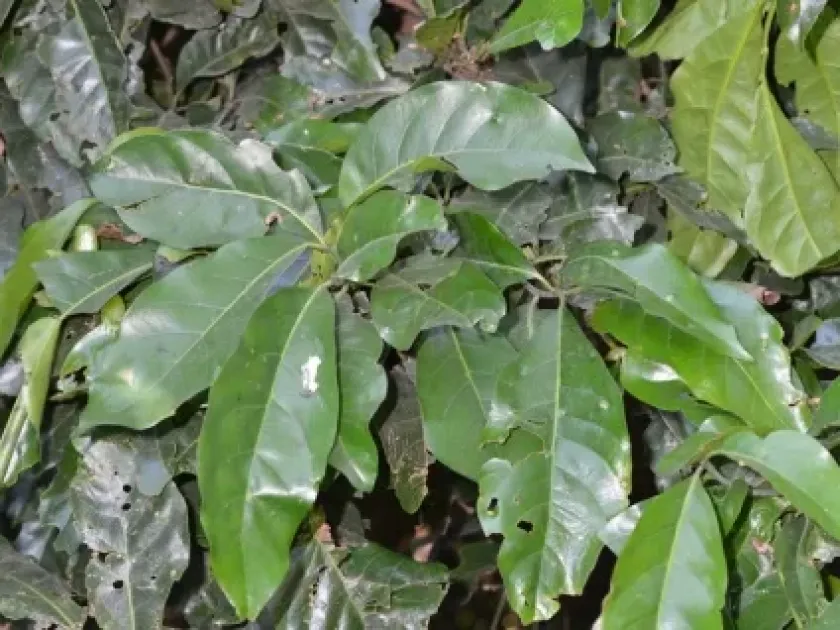
Description
Growing requirements
Beilschmiedia mannii is a large evergreen tree belonging to the Lauraceae family. In its natural habitat, it can reach heights of 30 to 40 meters, characterized by a robust trunk and a dense, expansive canopy.
This species is native to the tropical lowlands of Western and Central Africa. It thrives in humid tropical rainforest environments where annual rainfall is high, typically exceeding 2000 mm, and temperatures remain consistently warm throughout the year.
The culture requires deep, well-draining soils rich in organic matter. Loamy soils are considered ideal, as they provide the necessary moisture retention while preventing the saturation that can lead to root system decay.
The tree is sensitive to strong winds and prefers shade during its early growth stages. As it matures, it becomes more shade-tolerant, eventually competing for light in the upper layers of the forest canopy.
Cultivation practices are largely focused on reforestation efforts. Successful establishment requires nursery management with precise humidity control to ensure young seedlings are protected from desiccation during their vulnerable phases.
Harvesting
The primary economic use of this tree is its high-quality timber. The wood is dense, durable, and naturally resistant to rot, making it highly valued for furniture construction, joinery, and specialized woodworking projects.
Harvesting is conducted under strictly monitored sustainable forestry programs. Proper planning ensures that trees are only felled once they have reached sufficient maturity, ensuring the structural integrity of the harvested timber.
Beyond timber, parts of the plant are utilized in traditional ethnobotanical practices. Harvesting of bark and seeds is performed with care to prevent ecosystem degradation and to maintain the viability of local tree populations.
Due to the tree's slow growth rate, long-term resource management is essential. Utilizing timber byproducts and optimizing processing efficiency are critical components of the economic strategy associated with this species.
The ecological importance of the species cannot be overstated, as it contributes significantly to rainforest stability. Conservation efforts are vital to protect this species, balancing its economic utility with the preservation of its natural forest habitat.