
Fothergilla major
Fothergilla major G. Lodd.
Description
Growing requirements
Fothergilla major, commonly known as mountain witch alder, is a deciduous shrub belonging to the Hamamelidaceae family. Native to the southeastern United States, this species thrives in temperate zones and is highly valued for its multi-seasonal ornamental characteristics.
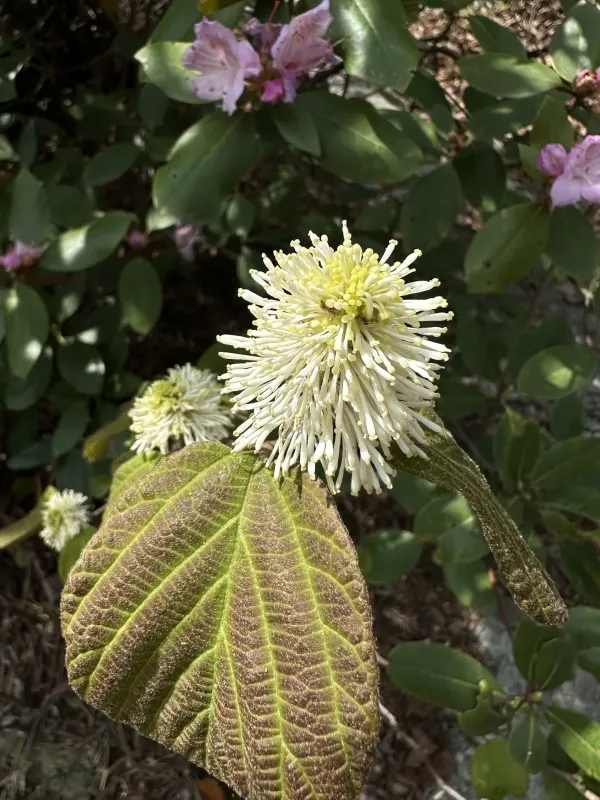
The plant features distinct inflorescences that resemble white, bottlebrush-like spikes, which emit a delicate honey scent in early spring. The foliage emerges after blooming, providing a lush green backdrop that transitions into spectacular shades of yellow, orange, and red during the autumn months.
For optimal growth, Fothergilla major requires acidic, moisture-retentive, and well-drained soils rich in organic matter. It performs best in conditions similar to its natural habitat, which includes dappled shade or partial sun, avoiding extreme heat and dry soil conditions.
Cultural practices involve maintaining a consistent moisture level, especially during the first few years after planting. Mulching is highly recommended to protect shallow roots from temperature fluctuations and to help retain soil acidity and moisture levels throughout the growing season.
The primary use of this species is in ornamental horticulture. Its compact habit and vibrant seasonal color changes make it an excellent choice for foundation plantings, shrub borders, and woodland gardens, adding structure and textural interest to any landscape design.
Main diseases and pests
The shrub is generally resistant to serious pest and disease problems. However, in alkaline soil conditions, the plant is prone to chlorosis, characterized by yellowing of leaves. This can be managed by adjusting soil pH with sulfur or incorporating acidic compost.
Occasional infestations of aphids or spider mites may occur during periods of prolonged drought or stress. Maintaining healthy soil moisture and general plant vigor through mulching and proper location selection is usually sufficient to minimize the risk of significant pest damage.