
Fothergilla x intermedia
Fothergilla x intermedia Ranney & Fantz
Description
Growing requirements
Fothergilla x intermedia is a highly sought-after ornamental shrub belonging to the Hamamelidaceae family. This hybrid, resulting from a cross between F. major and F. gardenii, combines the best characteristics of both parents, offering superior garden performance and distinct seasonal interest.
The plant thrives in locations with partial to full sun, provided the soil remains consistently moist. It is classified as an acid-loving plant, requiring a growing medium with a pH between 5.0 and 6.5. High organic matter content is essential for robust growth and vibrant foliage development.
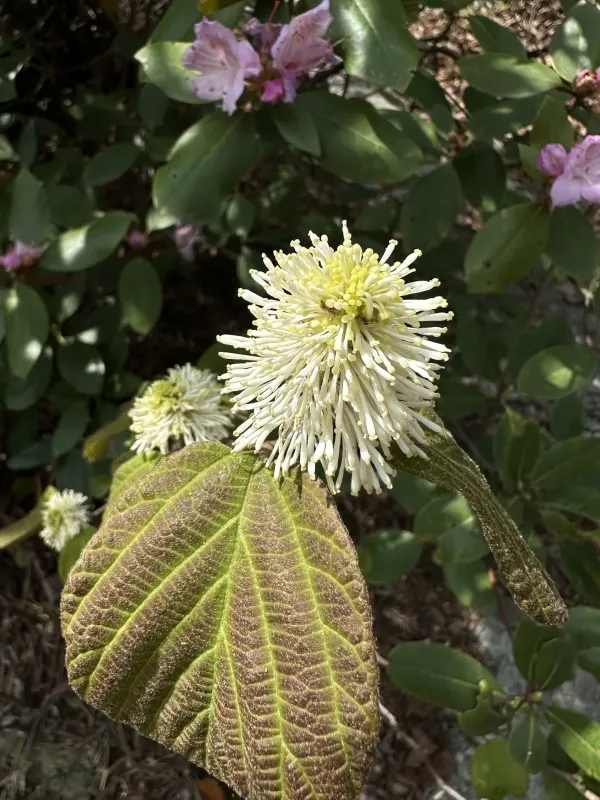
Spring is marked by the appearance of unique, bottlebrush-like white flowers that emit a honey-like fragrance. The leaves, typically obovate with serrated edges, create a lush backdrop throughout the summer, while the autumn transition reveals spectacular colors ranging from yellow to deep purple.
Maintenance involves routine watering during dry spells, as the root system is fibrous and shallow. Applying a layer of pine bark or peat moss as mulch serves multiple purposes: it retains moisture, suppresses weeds, and maintains the required soil acidity level throughout the growing season.
Pruning should be kept to a minimum and performed immediately after flowering if necessary. The objective is to maintain a natural, attractive shape rather than a formal structure. The plant is hardy in most temperate climates, adapting well to garden soil if drainage is properly addressed.
Main diseases and pests
Fothergilla x intermedia exhibits excellent resistance to most common garden diseases. However, in poorly ventilated or excessively humid conditions, plants may occasionally suffer from powdery mildew. Proper spacing during planting significantly reduces this risk.
Chlorosis is the most frequent physiological issue, usually caused by improper soil pH. If the soil becomes too alkaline, iron uptake is inhibited, leading to leaf yellowing. Regular testing and the use of acidifying fertilizers can easily prevent this common condition.
Insect pests such as aphids or spider mites may occasionally infest young shoots. While these pests rarely threaten the life of a well-established shrub, they should be managed early with appropriate horticultural oils or insecticidal soaps to prevent leaf distortion.
The accumulation of dead or damaged wood after winter can provide a breeding ground for opportunistic pathogens. Conducting a yearly sanitary inspection of the canopy helps maintain plant vigor and eliminates potential entry points for diseases.
Proactive management of soil conditions and consistent moisture levels constitute the best defense against pests and diseases. When healthy, Fothergilla remains an exceptionally low-maintenance asset for any professional or amateur landscape design.