
Dryobalanops oblongifolia
Dryobalanops oblongifolia
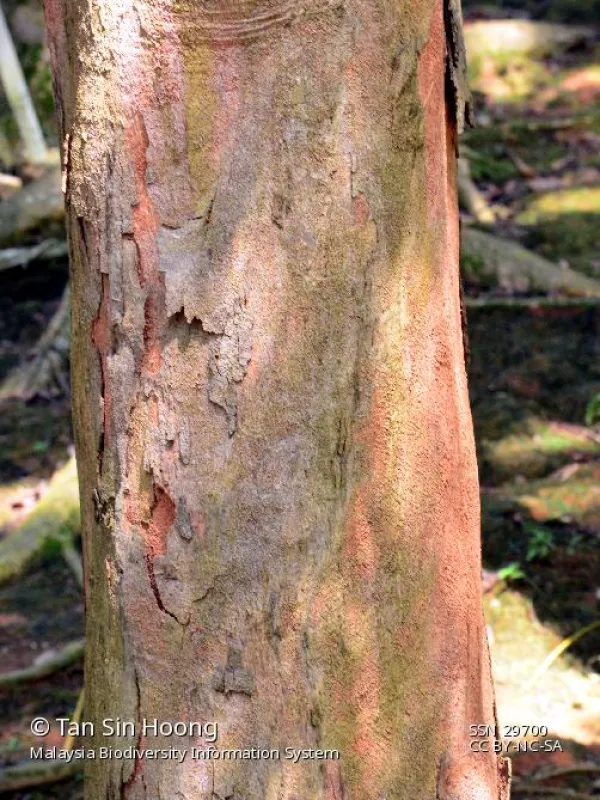
Description
Growing requirements
Dryobalanops oblongifolia is a prominent member of the Dipterocarpaceae family, a group of trees that defines the structure and ecology of the lowland rainforests in Southeast Asia. This species is highly regarded for its stature and its significant contribution to the canopy architecture of dense tropical forests.
The tree requires a tropical climate characterized by consistently high humidity and temperatures, as it lacks the mechanisms to survive pronounced dry seasons or cold spells. It thrives in well-drained, alluvial soils that retain sufficient moisture to support its intensive physiological processes throughout the calendar year.
Botanically, Dryobalanops oblongifolia is distinguished by its elongated, leathery leaves and a robust, columnar trunk. Its growth habit is adapted to compete for light within the forest understory during early development, eventually emerging as a dominant feature in mature forest stands.
Economically, the species is primarily valued for its durable and high-density timber, which is utilized in heavy construction and various specialized wood-based industries. The resinous properties of the wood also contribute to its natural resistance against various environmental factors, making it a sought-after resource.
Conservation efforts are increasingly focused on the sustainable management of this species, as natural stands are under pressure from land-use changes. Agrotechnical research is essential to understand the propagation requirements of Dryobalanops oblongifolia to ensure its future presence in reforested areas.
Main diseases and pests
The primary threats to Dryobalanops oblongifolia are driven by widespread deforestation and the fragmentation of its natural habitat. The conversion of primary tropical forests into agricultural land significantly reduces the connectivity of forest patches, hindering essential ecological interactions and genetic exchange.
In terms of phytosanitary issues, the trees are susceptible to various fungal pathogens, especially when the forest microclimate is disturbed. Root rot is a significant concern in sites where soil drainage is compromised, often triggered by excessive waterlogging following severe weather events.
Stem-boring insects and other wood-damaging pests pose a persistent threat, particularly in forests that have been subjected to logging activities. These pests exploit physical damage to the bark or weakened branches, facilitating the entry of secondary diseases that can cause internal decay of the timber.
Climate change poses a long-term risk, as altered precipitation patterns and increased frequency of extreme weather events exceed the adaptive capacity of many dipterocarp populations. Stressed trees demonstrate reduced resilience to biotic stressors, leading to increased mortality rates in vulnerable stands.
Effective management strategies require a comprehensive approach to monitoring forest health and identifying early signs of decline. Protecting remaining natural populations and implementing buffer zones are critical to mitigating the impact of both human activity and biological threats on this valuable tree species.