
Dryobalanops beccarii
Dryobalanops beccarii
Description
Growing requirements
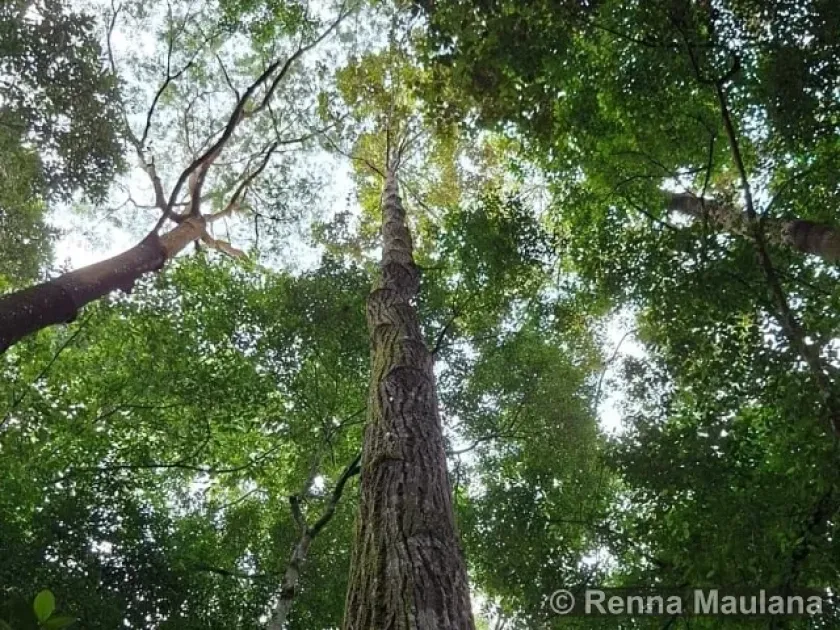
Dryobalanops beccarii is a prominent member of the Dipterocarpaceae family. It is a massive evergreen tree native to the tropical rainforests of Borneo and Sumatra, known for its significant height and ecological importance in the forest canopy.
The species thrives in humid tropical climates characterized by high annual rainfall and consistently warm temperatures. It is primarily distributed in lowland and hill dipterocarp forests where soil moisture is sufficient throughout the entire year.
Agro-ecological requirements focus on well-drained, deep soils with high organic matter content. While the tree can adapt to various soil types, its growth rate is significantly enhanced in nutrient-rich forest soils that support deep root penetration.
Light management is crucial for the cultivation of this species. Saplings typically grow in shade under the canopy, requiring a gradual increase in sunlight as they mature to develop strong and straight trunks suitable for high-quality timber production.
Botanical features include a tall, straight bole and buttress roots that provide stability. Its leaves are typically leathery and lanceolate, adapted to minimize water loss while maximizing photosynthetic efficiency in the dense forest environment.
Harvesting
The economic utilization of Dryobalanops beccarii is primarily focused on timber production. The wood is highly sought after for construction, flooring, and furniture due to its durability, density, and natural resistance to decay and termites.
Historical exploitation of this species involved the extraction of camphor, a resinous substance found within the stem. Traditional extraction methods involved tapping the tree, a practice that requires careful management to ensure the tree continues to thrive.
Harvesting strategies are moving toward sustainable forest management. Because the species grows relatively slowly, selective logging is the standard approach to maintain forest structure and allow for natural regeneration of the species.
Post-harvest processing of the timber involves specialized drying techniques to account for the resin content and natural density of the wood. This ensures that the final product remains stable and free from structural defects during its application in construction.
Beyond timber and resin, the tree plays a vital role in maintaining the microclimate of the forest. Its large canopy provides shade for smaller plants and serves as a habitat for diverse tropical fauna, contributing to the overall ecological stability of the region.