
Sichuan thuja
Thuja sutchuenensis
Description
Growing requirements
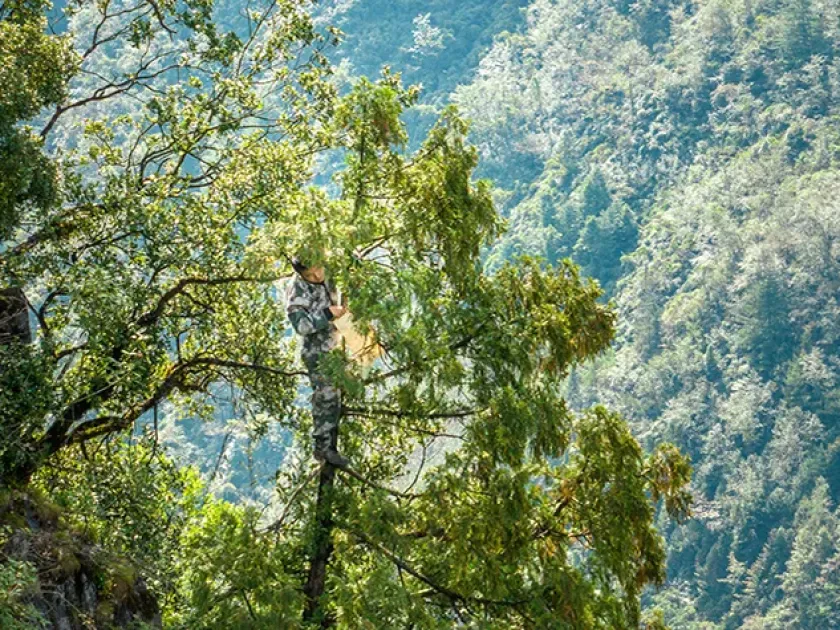
The Sichuan thuja (Thuja sutchuenensis) is an evergreen coniferous tree belonging to the Cupressaceae family. Originally thought to be extinct in the wild, it was rediscovered in the high-altitude areas of the Sichuan Province in China, where it grows in very specific mountain ecosystems.
In terms of cultivation, this species thrives in cool, moist, and stable environments. It is naturally adapted to limestone cliffs, meaning it prefers well-drained, slightly alkaline substrates that prevent any moisture buildup around the root system.
The plant requires high atmospheric humidity to maintain its health and vibrant green foliage. Growers should avoid exposure to hot, drying winds and direct summer afternoon sun, which can cause severe physiological stress to the tree's delicate needles.
Agrotechnical management is primarily focused on mimicry of its native alpine habitat. This involves providing excellent drainage through gravel-based soil amendments and ensuring consistent, light irrigation to keep the root zone cool without making it waterlogged.
Due to its status as an endangered species, it is often kept in botanical gardens for conservation purposes. Its growth rate is exceptionally slow, requiring patience and meticulous care regarding the light levels, which should remain in the partial shade range throughout the year.