
Pencil pine
Athrotaxis cupressoides
Description
Growing requirements
Athrotaxis cupressoides, commonly known as the Pencil pine, is a conifer species in the Cupressaceae family. It is strictly endemic to the cold, high-altitude regions of Tasmania, Australia.
This species requires a temperate, cool climate with high annual rainfall to thrive. It does not tolerate heat or arid conditions, making it unsuitable for cultivation in warmer geographical zones.
For successful cultivation, the plant needs acidic, moist, and well-drained soils. Rocky or peaty substrates that replicate its natural alpine habitat are preferred for optimal growth results.
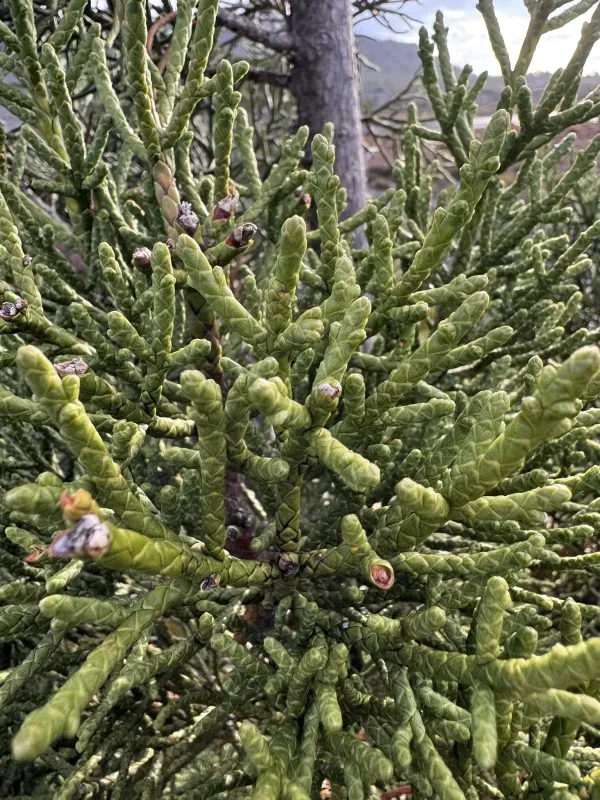
The tree exhibits a slow growth rate and can reach heights of up to 20 meters in its native habitat. Its foliage is unique, featuring small, scale-like leaves that are appressed against the branches.
In landscape architecture, the Pencil pine is used for its distinct architectural silhouette. It is best suited for arboretums and large gardens in regions with climate conditions mimicking the Tasmanian highlands.
Main diseases and pests
The Pencil pine is particularly susceptible to root rot if placed in waterlogged soil. Proper soil structure is the most critical factor in preventing subterranean fungal pathogens from colonizing the roots.
Climate change poses a significant threat to wild populations of this species. Increased frequency of fire events in its native range has led to localized declines as the species is sensitive to heat.
Pests such as scale insects and aphids may infest the dense foliage in sheltered environments. Early detection and the use of targeted systemic treatments are recommended for nursery-grown plants.
Deer and rodents can cause damage to the bark of young specimens. Protecting the trunks with mesh guards is a standard and necessary practice during the establishment phase of the young trees.
Air pollution and high concentrations of chemicals in the environment can adversely affect the health of these trees. It is highly advised to plant them in locations with high air quality standards.