
Roseodendron donnell-smithii
Roseodendron donnell-smithii (Rose) Miranda
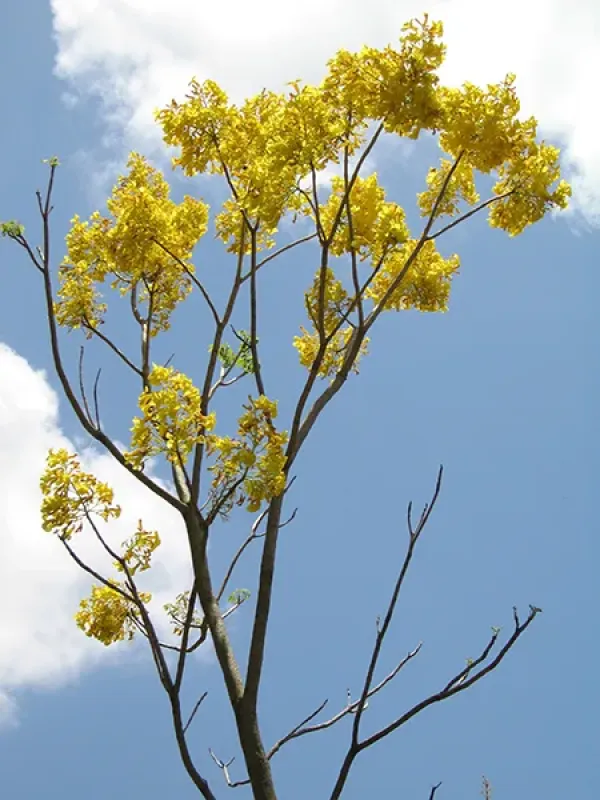
Description
Sowing dates
Sowing the seeds of Roseodendron donnell-smithii is typically carried out in specialized nurseries at the onset of the rainy season to provide seedlings with optimal moisture.
The seeds do not require complex pre-treatment, though it is highly recommended to use freshly harvested seeds to ensure the highest germination viability.
Seeds should be sown at a depth of 1 to 2 centimeters in a light, well-draining substrate to prevent premature rotting of the delicate embryonic roots.
Maintaining a stable temperature range between 22 and 28 degrees Celsius with consistent diffused light is crucial for successful and uniform germination.
Once seedlings reach a height of 30 to 50 centimeters, which usually takes about 4 to 6 months, they are ready for transplantation into their permanent field sites.
Growing requirements
Belonging to the Bignoniaceae family, this species is well-adapted to tropical regions that experience a distinct dry season, which promotes seasonal flowering cycles.
The ideal soil conditions for this tree include deep, fertile profiles with a neutral to slightly acidic pH, provided they have excellent natural drainage properties.
Waterlogging is extremely detrimental to the development of the root system, making site selection with adequate soil permeability a top priority for growers.
Roseodendron donnell-smithii is a photophilic plant, requiring full sun exposure throughout the day to support straight stem growth and healthy crown expansion.
While young trees benefit from regular moisture during the active growth phase, mature trees exhibit strong resilience to brief drought conditions once established.
Yield
The primary economic value of Roseodendron donnell-smithii lies in its high-quality timber, commercially recognized and traded under the name macuilishwood.
The production cycle to reach harvestable timber size generally spans from 20 to 35 years, contingent on soil quality and the intensity of forest management.
Its timber is highly regarded in furniture making, construction, and high-end joinery due to its remarkable durability, pleasing texture, and natural resistance.
Beyond timber production, the species serves an important ecological role, contributing to soil organic matter and providing essential habitats for local pollinators.
Forest management strategies often involve thinning operations, which help maximize the growth of selected trees while providing smaller wood products for local use.
Main diseases and pests
Primary threats to young plantations include fungal pathogens affecting the root system, often resulting from poor site drainage or excessive humidity levels.
Defoliating insects and specific tropical caterpillars can cause significant leaf loss, which slows the growth rate of young trees during their most critical years.
Regular phytosanitary monitoring is essential to detect pest outbreaks at early stages and implement necessary corrective actions before widespread damage occurs.
Integrated pest management, combined with proper spacing and nutrient maintenance, serves as the most effective defense against common biological stressors.
Avoiding mechanical damage to the bark is vital, as open wounds can serve as entry points for pathogens and wood-boring insects to compromise the trunk integrity.