
Pink trumpet tree
Tabebuia rosea (Bertol.) DC.
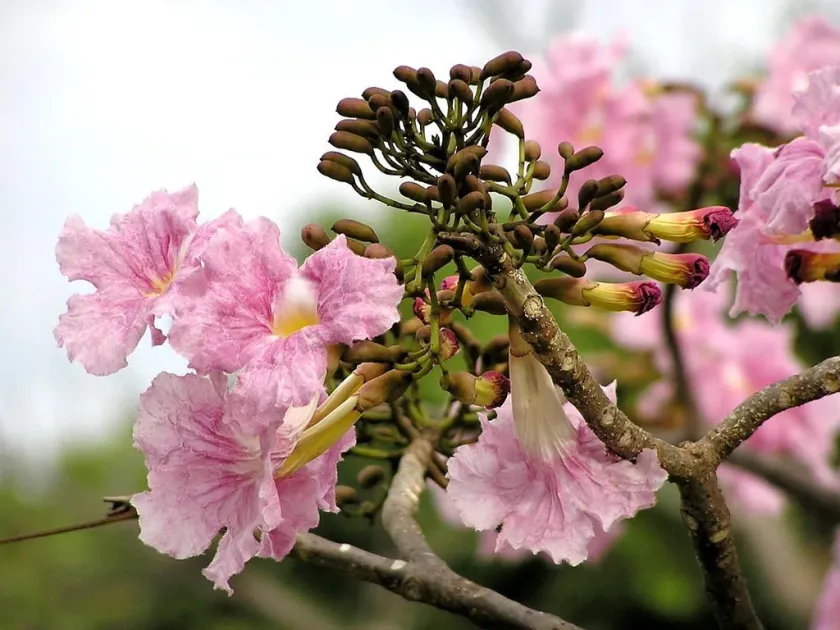
Description
Sowing dates
Propagation of Tabebuia rosea is primarily achieved through seeds collected from its long, pod-like fruits. Seeds should be sown as soon as possible after harvesting to maintain high viability rates.
A well-draining, sandy loam substrate is ideal for sowing. The seeds should be lightly covered with soil to ensure sufficient moisture retention while allowing for necessary aeration for germination.
Optimal germination occurs at temperatures between 25 and 30 degrees Celsius. Seed trays should be kept in a bright, warm location, ensuring the soil remains moist but never waterlogged to prevent damping-off.
Seedlings emerge within two to four weeks. Once the first true leaves are developed, they should be transplanted into larger individual containers to foster strong root development before being placed in a nursery or field.
Hardening off the saplings is crucial before permanent outdoor planting. Gradual exposure to direct sunlight and fluctuating temperatures over several weeks prepares the young trees for environmental stressors.
Growing requirements
The pink trumpet tree belongs to the Bignoniaceae family and is native to tropical regions of the Americas. It is highly valued in ornamental landscaping for its dramatic floral displays.
This species requires full sun exposure to flourish and produce its iconic pink blossoms. It is sensitive to frost and cold winds, making it suitable only for climates where temperatures do not drop near freezing.
Soil requirements involve well-drained, fertile ground. While the tree can tolerate various soil textures, it thrives best in deep, loamy soils that provide both nutrient availability and excellent drainage.
Maintenance pruning is essential for structural integrity and aesthetic shape. Removing dead or crossing branches improves air circulation through the canopy, which is vital for the tree's health in humid environments.
Watering management is key to successful cultivation. Providing consistent water during the growing season supports foliage development, while a dry period during the onset of the flowering stage encourages intense blooming.
Main diseases and pests
Root rot, driven by stagnant water in the soil, remains the most significant threat to the tree's health. Improving site drainage is the primary method of preventing this detrimental condition.
Pests like aphids and scale insects may attack young shoots and leaves. Regular inspections of the foliage are recommended, followed by the application of organic insecticidal soaps if an infestation is detected.
Fungal leaf spot diseases can occur during prolonged periods of humidity. Ensuring the canopy is not too dense through proper thinning pruning helps mitigate the conditions that favor fungal growth.
Boring insects can occasionally target stressed trees, leading to limb weakening. Maintaining tree vigor through proper fertilization and watering is the best defense against such wood-boring pests.
In cases of severe infestation or disease, systemic fungicides or insecticides may be necessary. Always follow specific application rates to ensure efficacy without damaging the surrounding environment.