
Pandorea pandorana
Pandorea pandorana (Andrews) Steenis
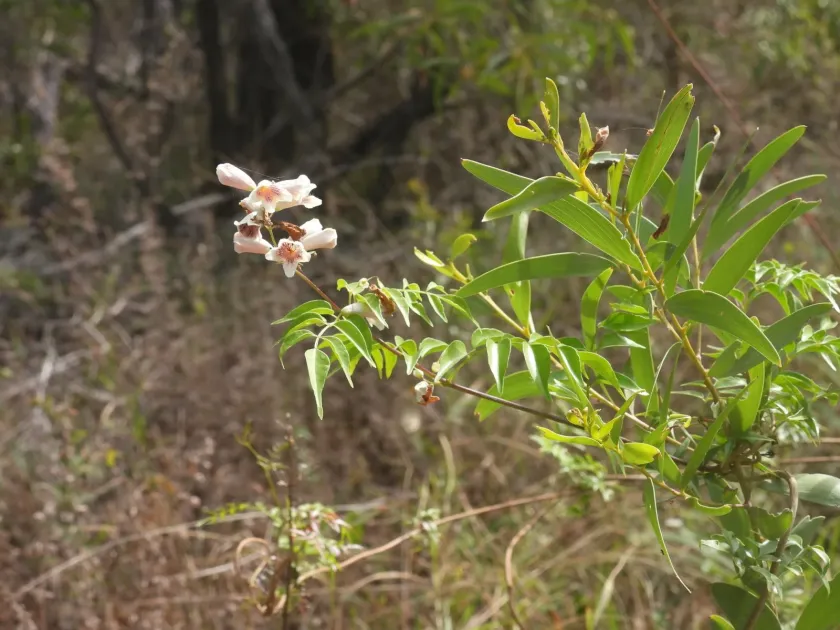
Description
Growing requirements
Pandorea pandorana, commonly known as the Wonga Wonga vine, is a vigorous evergreen climber belonging to the Bignoniaceae family. Native to Australia and parts of the Pacific, this plant is valued for its lush foliage and attractive, often fragrant, bell-shaped flowers.
Botanically, it is a woody vine that uses twining stems to ascend supports. The foliage consists of glossy, pinnate leaves with multiple leaflets, creating a dense canopy that makes it an excellent choice for screening or ornamental wall coverage in warm climates.
The plant thrives in positions with full sun to partial shade. While it prefers bright light for vigorous growth, young plants benefit from some protection from harsh afternoon sun, which can scorch the delicate leaves during peak summer heat.
A well-draining, nutrient-rich soil is essential for the healthy development of Pandorea. Incorporating organic compost or well-rotted manure into the planting hole ensures sufficient nutrient availability, while a slightly acidic to neutral pH level is ideal.
Regarding climate, this species is suited for frost-free environments. In cooler temperate regions, it must be grown in containers and brought indoors or into a greenhouse during winter, as it cannot withstand freezing temperatures without significant damage to its vascular system.
Main diseases and pests
Pandorea pandorana is generally resilient but can be affected by common sap-sucking pests like aphids and scale insects. Regular monitoring of the stems and leaf undersides is recommended, especially when plants are grown in confined or sheltered spaces.
Root rot is the primary physiological threat, usually occurring due to waterlogged soil or poor drainage systems. Implementing a layer of grit or perlite at the bottom of the container or planting site is a standard agronomical measure to mitigate this risk.