
Markhamia lutea
Markhamia lutea (Benth.) K. Schum.
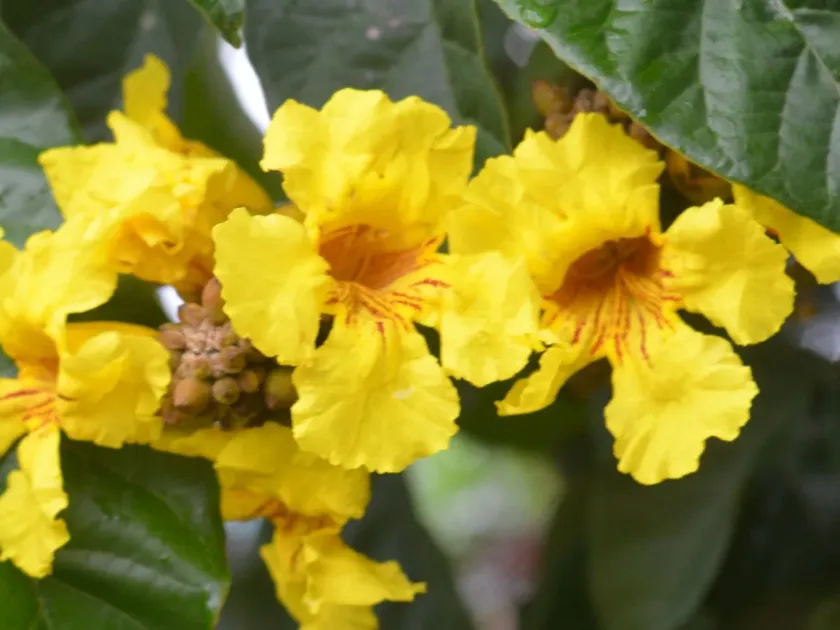
Description
Sowing dates
Propagation of Markhamia lutea is primarily achieved through seeds, which require careful handling to ensure optimal germination rates. It is recommended to soak the seeds in lukewarm water for 12 to 24 hours prior to planting to soften the seed coat.
Seeds should be sown in nursery containers using a well-draining potting mix rich in organic matter. Maintaining consistent moisture levels is vital during the initial stages, but over-watering must be avoided to prevent fungal rot.
Seedlings are typically ready for transplanting once they reach a height of 30 to 50 centimeters, which usually takes several months. Timing the transplanting phase with the start of the rainy season significantly improves the establishment and survival rate of the young trees.
Spacing is a critical factor for plantation health; a recommended density of 3x3 meters ensures that trees have sufficient access to sunlight and soil nutrients. Proper spacing also facilitates easier maintenance and access for pruning operations.
While vegetative propagation through stem cuttings is theoretically possible, it is less common than seed propagation. Using rooting hormones on semi-hardwood cuttings can improve success rates if the nursery chooses this method for multiplication.
Growing requirements
Markhamia lutea is a member of the Bignoniaceae family and thrives in tropical regions across East Africa. It is well-adapted to environments with moderate to high rainfall, generally between 700 and 1500 millimeters per year.
The tree prefers deep, fertile, and well-drained soils, although it exhibits a remarkable ability to survive in various soil types, including lighter, well-aerated loams. It does not tolerate waterlogged or stagnant soil conditions.
As a light-demanding species, Markhamia lutea requires full sun exposure for healthy growth and structural development. Shade-grown specimens often exhibit thinner trunks and slower growth rates, which can compromise the quality of the timber produced.
Optimal temperature ranges for this species fall between +18°C and +30°C. While it is quite hardy in its native habitat, it cannot withstand freezing temperatures or prolonged exposure to cold, limiting its cultivation to tropical and subtropical zones.
Ongoing maintenance, particularly in the first two years, includes weeding the immediate area around the stem. This reduces competition for water and nutrients, allowing the sapling to establish a robust root system quickly.
Yield
The primary economic output of Markhamia lutea is its high-quality timber. The wood is renowned for its strength, durability, and natural resistance to decay and termites, making it a preferred choice for furniture making and interior construction.
In well-managed plantations, trees can reach harvestable timber size within 15 to 20 years. Strategic pruning is essential to ensure the development of a long, straight bole, which significantly increases the market value of the harvested logs.
Beyond its timber value, the tree is a valuable asset in agroforestry systems. Its foliage produces a significant amount of leaf litter that acts as a natural fertilizer, improving soil structure and fertility for intercropped food plants.
The yellow flowers are highly attractive to bees, making this species an excellent addition to apiaries located within or near tree plantations. The nectar yield supports local honey production while simultaneously enhancing pollination in the area.
The species also provides secondary products, such as fuelwood from thinning operations and branches trimmed during management. This multi-purpose utility ensures that farmers derive consistent value from the plantation throughout the tree's lifecycle.
Main diseases and pests
Markhamia lutea is generally resilient to many common pests, though young saplings can be vulnerable to defoliation by caterpillars and leaf-eating insects. Regular scouting is recommended, with biological control agents preferred over broad-spectrum chemicals.
Fungal infections of the root system are the most significant threat, usually caused by improper soil drainage or excessive irrigation. Symptoms include yellowing leaves and stunted growth; corrective measures involve improving drainage and pruning dead roots.
Wood-boring beetles can affect mature trees, potentially damaging the internal quality of the timber. Managing tree health through timely pruning of weak or damaged branches helps prevent beetle infestations and maintains the structural integrity of the wood.
Weed infestation during the establishment phase is a major threat that can lead to high mortality rates among young plantings. Maintaining clean, weed-free zones around each tree is the most effective preventative measure against stunting.
Periodic sanitary inspections of the stand are necessary to identify early signs of stress or infestation. A healthy, well-maintained tree will naturally resist most biotic threats, highlighting the importance of proper silvicultural practices in plantation success.