
Kigelia africana
Kigelia africana (Lam.) Benth.
Description
Sowing dates
Propagation of Kigelia africana is primarily achieved through seeds extracted from mature fruits. For optimal germination results, seeds should be soaked in warm water to soften the outer shell.
The best time to initiate sowing is during the spring when temperatures are consistent. A stable thermal environment of 22–25 degrees Celsius is essential to break dormancy and encourage root development.
Seeds should be sown in a well-draining, loose soil mix at a depth of 1–2 centimeters. Maintaining uniform moisture is critical; however, excessive water should be avoided to prevent seed rot.
Seedling emergence is often irregular and can take several weeks to months. Once true leaves develop, young plants should be carefully transplanted into individual containers with nutrient-rich substrate.
While vegetative propagation through cuttings is possible, it requires controlled high-humidity environments and expert handling, making seed propagation the standard method for most growers.
Growing requirements
Kigelia africana, a member of the Bignoniaceae family, is a strictly tropical species. It thrives in frost-free climates and is sensitive to cold temperatures, limiting its outdoor cultivation to tropical regions.
This tree requires full sun exposure to flourish. Abundant light is necessary for healthy leaf formation, dense canopy development, and the successful production of its signature large fruits.
Soil quality must be high, with an emphasis on excellent drainage. Kigelia performs poorly in heavy clay or waterlogged soils, which significantly increase the risk of root pathogens.
While mature trees are somewhat drought-tolerant due to their deep root systems, supplemental irrigation during the growth phase is recommended to maximize yield and overall plant vigor.
Ample space is essential for this species, as it grows into a large, spreading tree. Site selection should account for its full maturity dimensions to avoid structural issues in gardens or orchards.
Yield
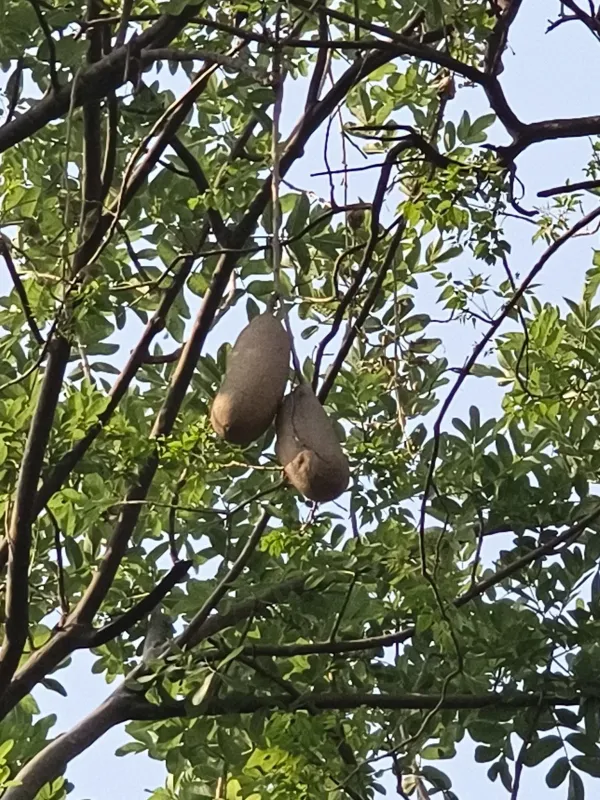
The yield of Kigelia africana is characterized by its massive, sausage-like fruits that can weigh up to 10 kilograms. These fruits are valued for their bioactive chemical compounds.
Flowering and fruiting cycles are often dependent on the rainy season, though in stable tropical environments, the tree can produce fruit throughout much of the year.
The primary economic value lies in the cosmetic and pharmaceutical sectors. Fruit extracts are highly sought after for their skin-firming properties and anti-inflammatory benefits.
Secondary use of the tree includes its high-quality, durable timber, which is resistant to decay. It is frequently used in traditional carpentry for furniture making and utility items.
In certain cultures, specific preparations of the fruit are used for fermentation, though caution is required due to the raw fruit's potential irritant properties for sensitive tissues.
Main diseases and pests
Leaf-eating insects and caterpillars are common pests that can compromise the tree's health and aesthetic value. Regular canopy monitoring is necessary to prevent severe infestations.
Fungal diseases, often manifesting as leaf spots, can occur in environments with high humidity and poor air circulation. Proper pruning is essential to improve airflow throughout the crown.
Root rot is a significant threat, usually caused by overwatering or soil that lacks adequate permeability. Ensuring proper drainage is the most effective preventative measure.
Parasitic plants can occasionally establish themselves on the branches of the Kigelia. Mechanical removal of these invaders is recommended to ensure the tree maintains its growth vigor.
- Sanitary pruning to remove dead wood and pests.
- Use of neem oil or biological controls for insect management.
- Regular soil aeration to support healthy root systems.
Harvesting
Harvesting Kigelia fruits requires significant care due to the weight and height of the fruit. Falling fruits can cause injury or damage, necessitating the use of nets or specialized equipment.
The ideal harvest time is determined by the fruit's color transition to a brownish-grey shade. Harvesters must monitor the orchard daily as fruits tend to drop once they reach full maturity.
Post-harvest handling is critical, as the biological compounds in the fruit can degrade quickly under high heat. Efficient transport to processing facilities is necessary for quality control.
Storage of fresh fruit is difficult, leading most commercial operations to process the fruits into extracts or dried powders immediately after harvest to stabilize the ingredients.
Seed extraction for nursery use follows the harvest. The seeds are separated from the fibrous pulp and cleaned thoroughly to prevent fungal growth before being stored for future planting.