
Amphilophium dusenianum
Amphilophium dusenianum
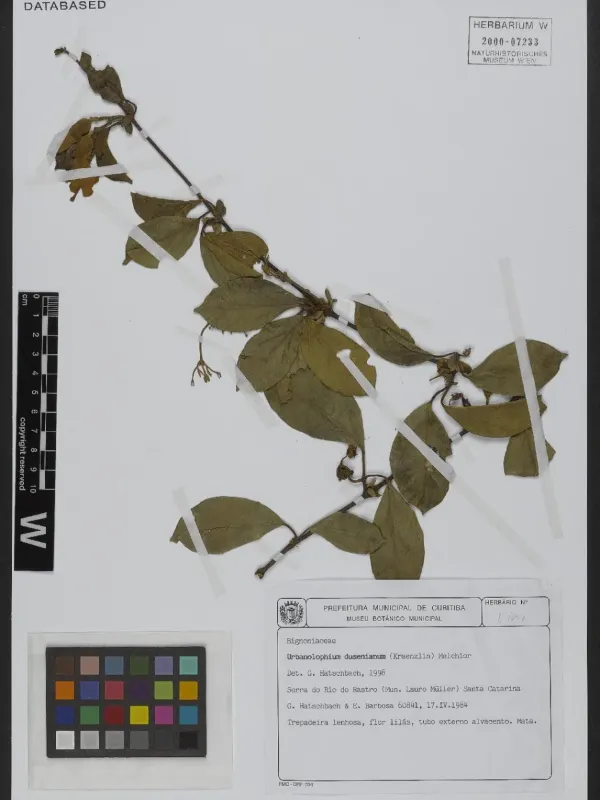
Description
Growing requirements
Amphilophium dusenianum is a perennial woody climber belonging to the Bignoniaceae family. This species is recognized for its rapid growth rate and specialized tendrils, which allow it to scale natural supports and structures effectively in its native environment.
Native to South America, specifically the tropical forests of Brazil, this plant thrives in warm, humid conditions. It is well-adapted to the competition for sunlight within the forest canopy, requiring substantial light exposure to reach its full vegetative and floral potential.
The climatic requirements are strictly tropical, meaning the plant must be protected from frost and sudden temperature drops. For successful cultivation, it needs a well-draining soil mix that remains moist but never waterlogged, ensuring proper aeration for the roots.
Agrotechnical maintenance involves the installation of sturdy supports, as the mature vine becomes quite heavy. Regular monitoring of irrigation levels is essential, as the plant is sensitive to both prolonged drought and excessive water accumulation in the root zone.
Economically, Amphilophium dusenianum is utilized primarily in ornamental horticulture and large-scale landscaping. Its ability to create dense foliage cover makes it an excellent choice for vertical greening projects in tropical zones, providing aesthetic value and natural shade.
Main diseases and pests
The primary pests affecting Amphilophium dusenianum include spider mites and scale insects. These pests often thrive in environments with low air circulation or high temperatures, causing yellowing and premature leaf drop by extracting nutrients from the foliage.
Root rot represents the most significant threat to plant health, typically caused by poor drainage or overwatering. When the soil remains saturated for extended periods, the root system loses its ability to uptake water and nutrients, eventually leading to plant decline.
Fungal diseases, including powdery mildew, may affect the leaves during periods of high humidity and poor ventilation. Keeping the plant in a location with adequate airflow helps to minimize the incidence of these pathogens and promotes stronger leaf structure.
Bacterial leaf spot can occur if environmental stress occurs, often manifesting as localized necrotic lesions. Sanitation, such as removing affected plant tissue and ensuring sterile conditions, is a critical step in managing the spread of bacterial infections.
Effective management requires a combination of regular visual inspections and proper cultural practices. Maintaining a clean growing area and utilizing preventative biopesticides can effectively keep the plant healthy and vigorous throughout its growth cycle.