
Allophylus pseudopaniculatus
Allophylus pseudopaniculatus
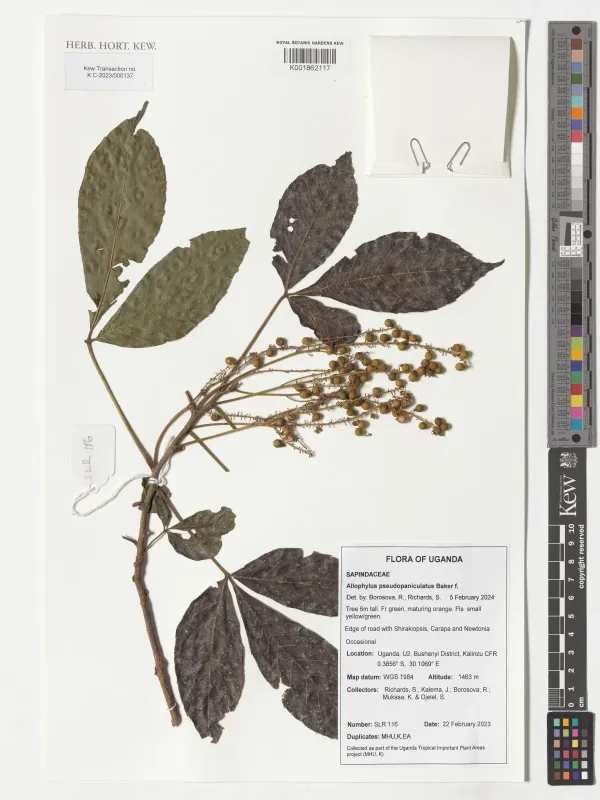
Description
Growing requirements
Allophylus pseudopaniculatus belongs to the Sapindaceae family. It is a tropical woody plant that is characterized by its specific foliage structure and adaptability to humid forest environments.
Climate requirements include consistently warm temperatures, ideally between 22°C and 28°C. The plant does not tolerate frost or cold drafts, which can lead to rapid leaf drop.
Soil conditions should prioritize high permeability. A loamy soil mix enriched with leaf mold and organic compost provides the best results for healthy root development.
Lighting needs are moderate; the plant thrives in semi-shaded conditions where it can receive indirect sunlight throughout the day.
Agrotechnical management involves regular soil moisture monitoring and pruning to maintain a balanced shape, which is essential for ornamental or managed forest use.
Main diseases and pests
Common pests include spider mites and mealybugs, which are frequently encountered in controlled environments if the air humidity is kept too low.
Fungal pathogens causing root rot represent the most significant threat if the planting site lacks proper drainage or if irrigation is excessive.
Leaf spots may occur due to bacterial infections; these are best managed by improving air circulation around the canopy and removing affected leaves.
Integrated pest management (IPM) strategies, including the use of neem oil or insecticidal soaps, are effective for maintaining plant health.
Monitoring for symptoms of nutrient deficiency is also critical, as chlorosis can often be mistaken for pest damage if the soil pH is not properly maintained.