
Allophylus ferrugineus
Allophylus ferrugineus
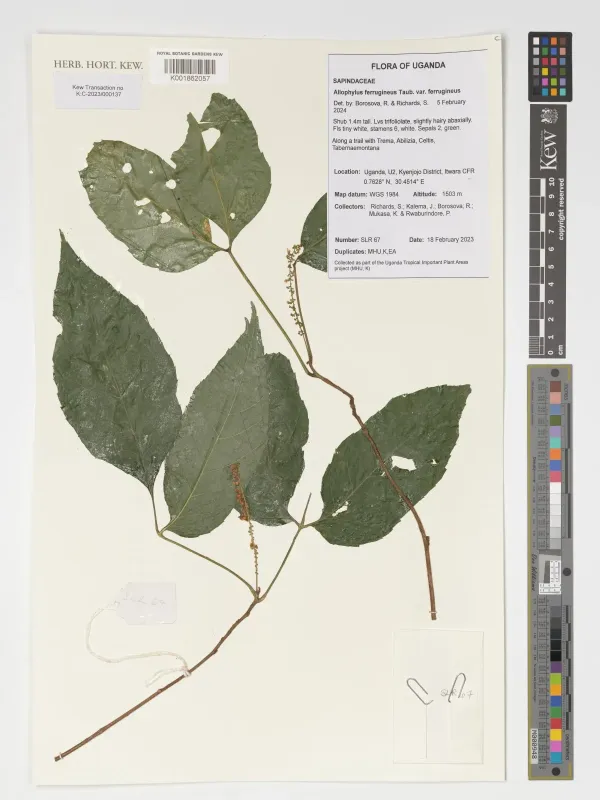
Description
Growing requirements
Allophylus ferrugineus is a distinct species within the Sapindaceae family, commonly recognized for its botanical adaptation to tropical and subtropical environments. It grows as a woody shrub or a small tree characterized by a robust growth habit in its natural habitat.
Cultivation requires specific soil conditions, specifically well-draining loamy soils that remain moist but not waterlogged. Soil acidity should ideally range from slightly acidic to neutral to ensure optimal nutrient uptake and long-term vitality of the plant.
Environmental requirements include a stable tropical climate with minimal seasonal temperature fluctuations. The plant thrives under conditions of high relative humidity, which is crucial for maintaining the integrity of its characteristic ferruginous (rust-colored) pubescence.
Botanically, the species is distinguished by its compound leaves and specific hair-like structures on the stem, which provide both an ornamental appeal and a tactical defense mechanism against certain environmental stressors common in tropical ecosystems.
Economically, this species is valued in landscape architecture and biodiversity-focused agricultural projects. It serves as a valuable component in forest enrichment programs, where it is utilized for its resilience and its contribution to the overall micro-climate stability.