
Actinostrobus arenarius
Actinostrobus arenarius
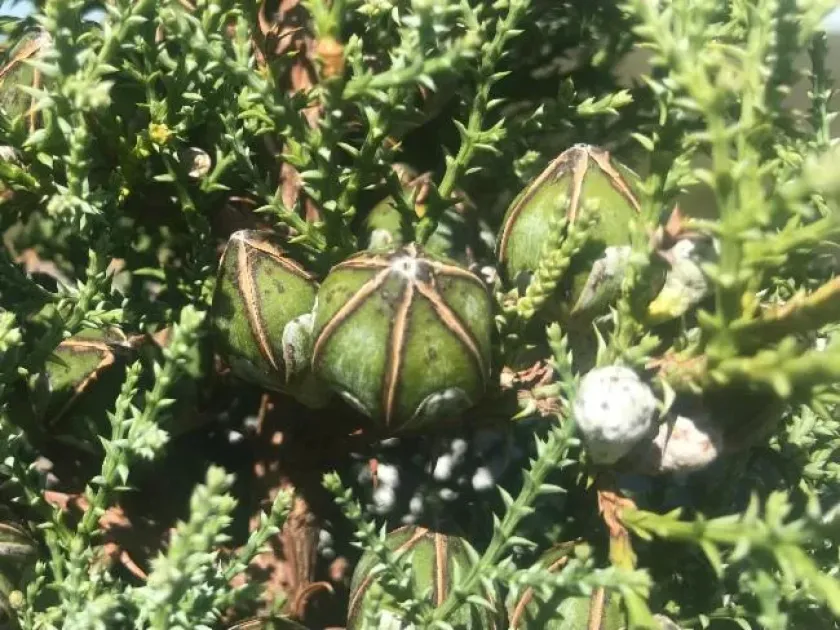
Description
Growing requirements
Actinostrobus arenarius, commonly known as the sand cypress, is an evergreen shrub belonging to the Cupressaceae family. It is native to the western regions of Australia, where it is well-adapted to sandy soils and harsh, arid environmental conditions.
The plant exhibits remarkable physiological resilience, thriving in nutrient-poor substrates that would be unsuitable for many other crops. Its structure includes stiff, scale-like leaves that are specialized to minimize water loss, reflecting its evolutionary adaptation to the Australian climate.
Successful cultivation requires sites with full solar exposure and exceptionally well-drained soil. The plant is highly sensitive to waterlogged conditions, which can quickly lead to root rot; therefore, the substrate must provide high aeration for the root system.
Agronomic management involves minimal intervention, emphasizing a "dry" cultivation strategy. Irrigation should be applied only during the establishment phase, while fertilization is generally discouraged to prevent excessive, weak vegetative growth that makes the plant prone to stress.
In terms of practical application, the sand cypress is primarily valued in xeriscaping and ornamental landscaping. Its distinctive architectural form provides a unique aesthetic to dry garden designs, making it a sought-after species for collectors and landscape architects alike.