
Graptoveria Elegans
Echeveria elegans Rose x Graptopetalum filiferum (S. Watson) J. Whitehead
Description
Growing requirements
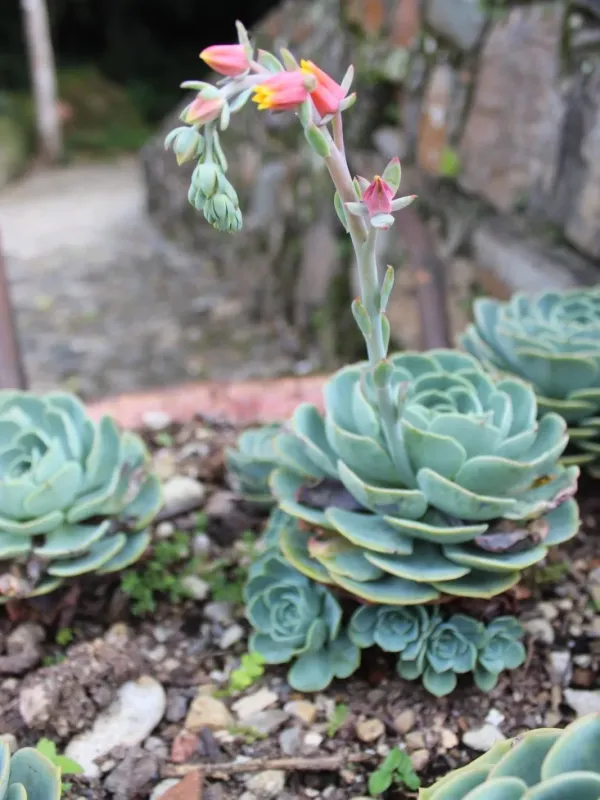
Graptoveria Elegans is a hybrid succulent resulting from the crossbreeding of Echeveria elegans and Graptopetalum filiferum. This plant belongs to the Crassulaceae family and is highly valued for its aesthetic compact rosettes of fleshy, pale-colored leaves.
Native to arid regions of Mexico, this cultivar thrives in bright, direct sunlight. Proper light exposure is critical to maintaining the plant's structural integrity and preventing it from becoming leggy, especially during the active growth season.
Optimal growth occurs at temperatures between +20°C and +25°C. During the winter dormancy period, the plant prefers cooler temperatures around +10°C to +15°C. This cycle is essential for healthy development and may trigger the production of delicate flowers.
The soil must be highly porous and well-draining, similar to the conditions found in rocky desert habitats. A commercial succulent mix amended with perlite, pumice, or coarse sand is recommended to facilitate rapid water drainage away from the root system.
Watering should be performed only when the soil medium is completely dry to the touch. During the dormant winter season, water should be applied very sparingly to prevent root rot, which is the primary cause of mortality in indoor succulent collections.
Main diseases and pests
Mealybugs are the most common pests that infest the crevices between the succulent leaves. These insects extract sap and leave behind a white, cottony residue, requiring targeted treatment with appropriate systemic insecticides.
Root and stem rot pose a significant threat, usually caused by overwatering or poor drainage. Infected plants show signs of softening and discoloration, necessitating immediate repotting into fresh, dry soil after removing decaying tissue.
Spider mites may appear in conditions of low humidity and poor air circulation. While difficult to detect early, they cause damage by puncturing plant cells, which manifests as fine spotting or yellowing on the leaf surface.
Fungal infections can develop if moisture remains trapped within the leaf rosette for too long. Improving air ventilation and ensuring water never pools in the center of the plant is vital for disease prevention.
Etiolation is a physiological issue caused by insufficient light, leading to stretched stems and loose, weak rosettes. While not a disease, it ruins the plant's decorative appeal and requires corrective pruning and relocation to a brighter site.