
Firewheel tree
Stenocarpus sinuatus
Description
Growing requirements
Stenocarpus sinuatus, commonly known as the Firewheel tree, is a prominent member of the Proteaceae family, native to the rainforests of eastern Australia.
This evergreen tree thrives in warm, humid tropical and subtropical climates, requiring protection from frost and cold winds to maintain its health and foliage.
Cultivation necessitates deep, rich, and well-draining soils. As a member of the Proteaceae, it is particularly sensitive to excessive phosphorus levels in fertilizers.
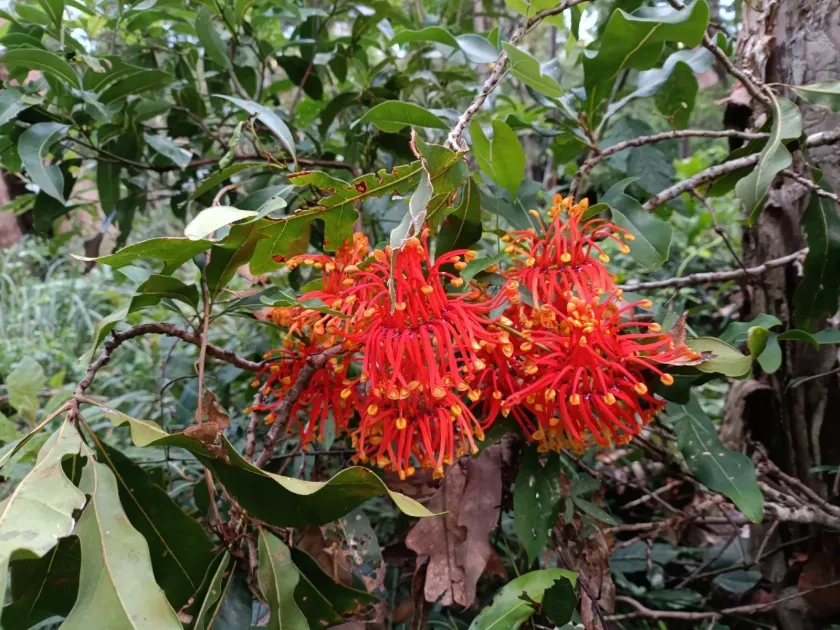
The botanical structure includes distinct lobed leaves and unique, vivid red inflorescences that resemble a wheel, providing high ornamental value in tropical gardens.
In its native habitat, it grows into a large tree, whereas in containerized agriculture or confined spaces, it requires pruning to manage its architectural size.
Main diseases and pests
Root rot is the most significant threat to Stenocarpus sinuatus, especially in heavy soils where water drainage is insufficient, often caused by Phytophthora species.
Scale insects and mealybugs are the primary pests that can infest the stems and undersides of leaves, causing aesthetic damage and weakening the plant structure.
Leaf spot diseases may occur during periods of high humidity and poor air circulation, necessitating improved ventilation practices in greenhouses.
Nutrient imbalances, particularly chlorosis due to high pH, frequently inhibit the plant's ability to absorb essential trace elements, leading to yellowing foliage.
Monitoring for pest outbreaks and ensuring the soil remains slightly acidic are critical management strategies for maintaining a healthy plantation.