
Scrub Beefwood
Stenocarpus salignus
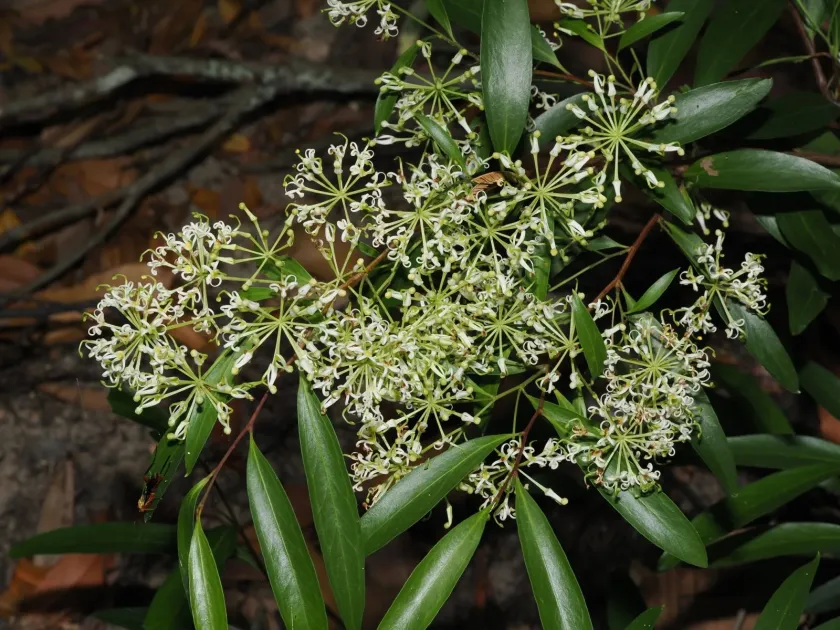
Description
Growing requirements
Scrub Beefwood (Stenocarpus salignus) is a prominent member of the Proteaceae family. It is an evergreen tree species native to the rainforests and moist forests of eastern Australia.
This species thrives in well-drained, slightly acidic soils rich in organic matter. It prefers sites with full sun to partial shade, which allows for optimal development of its unique willow-like foliage.
Climate requirements for this plant include moderate temperatures with protection from harsh frosts, especially during the establishment phase. It benefits from high humidity typical of its natural habitat.
Botanically, the tree is noted for its beautiful, leathery leaves and distinctive, spider-like flower clusters. In optimal conditions, it can grow into a medium-sized tree, adding significant aesthetic value to gardens.
Management practices should focus on avoiding high-phosphorus fertilizers, as members of the Proteaceae family are sensitive to phosphorus and require specialized, low-phosphorus nutrient solutions.
Main diseases and pests
The primary concern for Scrub Beefwood is the risk of root rot, often caused by poor drainage. Ensuring the planting site has excellent soil structure is essential for long-term health.
Pests like scale insects and mealybugs can occasionally infest the foliage, particularly in stressful environmental conditions or where ventilation is restricted.
Leaf spot diseases may occur in areas with consistently high humidity and poor airflow. Regular monitoring of the canopy is recommended to detect any early signs of fungal infection.
Proper pruning practices are necessary to maintain tree vigor and airflow, which helps prevent the accumulation of pathogens within the dense foliage of the tree.
Maintaining a mulch-free zone near the trunk prevents moisture build-up against the bark, reducing the risk of collar rot and other trunk-related ailments.