
Pine-leaf geebung
Persoonia pinifolia
Description
Growing requirements
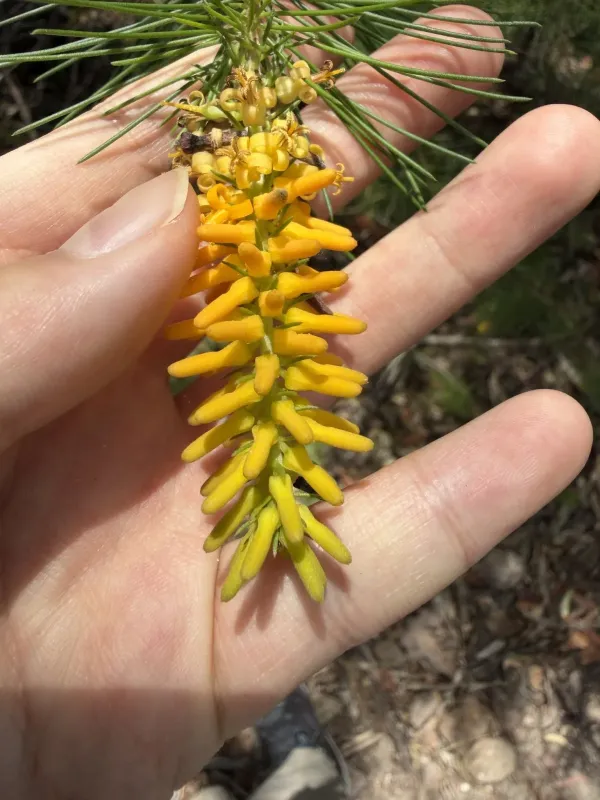
The Pine-leaf geebung (Persoonia pinifolia) belongs to the Proteaceae family and is native to the coastal regions of New South Wales, Australia. It is a large, evergreen shrub recognized for its distinctive foliage that mimics pine needles, providing a unique texture in ornamental plantings.
This species thrives in well-drained, sandy or gravelly soils that are low in phosphorus. It requires a sunny, open location and is adapted to a temperate climate, though it can struggle with prolonged frost. Proper site selection is crucial to ensure long-term health.
Agricultural management of Persoonia pinifolia emphasizes minimal intervention. Growers must avoid fertilizers rich in phosphorus, as the plant's roots are highly specialized for nutrient uptake in poor soils and can be damaged by standard commercial fertilizers.
The plant requires consistent but moderate watering. Over-saturation is dangerous, as the root system is prone to fungal pathogens in stagnant water conditions. Strategic pruning is beneficial to maintain a bushy shape and encourage dense foliage development.
Economically, this species is highly valued in the florist industry as a filler foliage. Its longevity after cutting and unique aesthetic appeal make it a specialty crop for growers focused on high-end floral materials in compatible climates.
Main diseases and pests
The most significant threat to the Pine-leaf geebung is root rot caused by Phytophthora cinnamomi. This water-borne pathogen thrives in wet soil conditions and can devastate entire plantations if drainage is not managed correctly.
Pests such as mealybugs and spider mites may occasionally infest the plants, particularly in glasshouse or container-grown settings. Maintaining good air circulation and monitoring moisture levels are the best strategies to prevent pest outbreaks.