
Persoonia chamaepitys
Persoonia chamaepitys
Description
Growing requirements
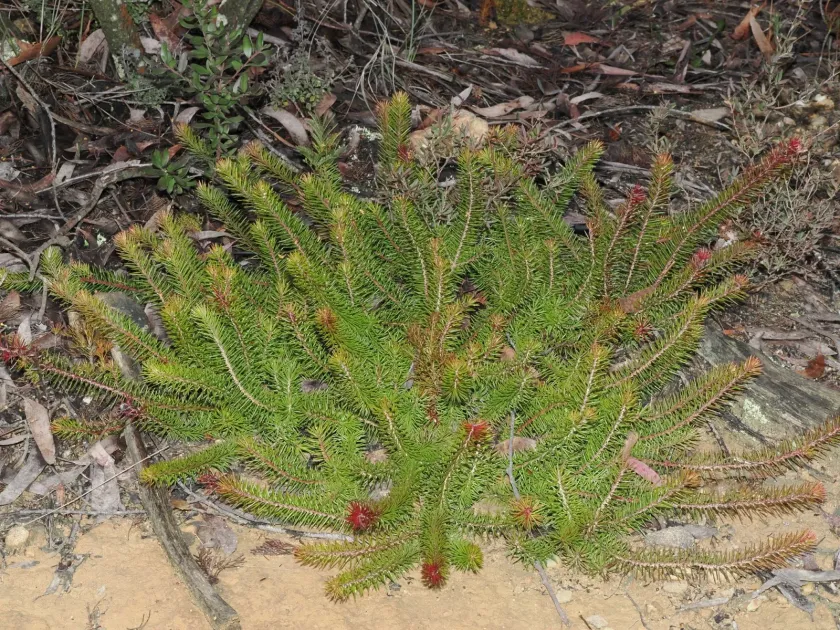
Persoonia chamaepitys is a perennial evergreen shrub belonging to the Proteaceae family, native to the rugged terrains of New South Wales, Australia. It is highly regarded in horticulture for its unique needle-like foliage that provides a distinct textural contrast in landscapes.
The cultural requirements for this species are specific, demanding free-draining, sandy or gravelly soils. In agricultural settings, ensuring a soil profile that prevents moisture stagnation is the most critical factor to avoid root system failure and subsequent pathogen development.
This shrub thrives in full sun but benefits from light, dappled shade during the hottest parts of the day in warmer climates. Its botanical structure is adapted to low-nutrient environments, which necessitates careful management of fertilizer inputs to avoid toxicity.
Regarding nutrition, the plant is extremely sensitive to phosphorus. Standard agricultural fertilizers often contain too much phosphorus for members of the Proteaceae family, so low-phosphorus or native-specific fertilizers are strictly required to ensure long-term health.
The cultivation of Persoonia chamaepitys requires patience due to its relatively slow growth rate. When establishing a planting, it is essential to minimize soil disturbance around the root zone, as the fine root hairs are delicate and susceptible to mechanical damage.
Main diseases and pests
The most significant threat to Persoonia chamaepitys is root rot caused by Phytophthora species. This disease is exacerbated by poor drainage and excessive moisture, making precise irrigation management the primary strategy for plant health maintenance.
Pests are generally manageable, but in protected environments, scale insects and mealybugs can colonize the dense foliage. Integrated pest management, focusing on early detection and physical removal or organic soaps, is recommended to keep the plants in optimal condition.