
Mimetes cucullatus
Mimetes cucullatus
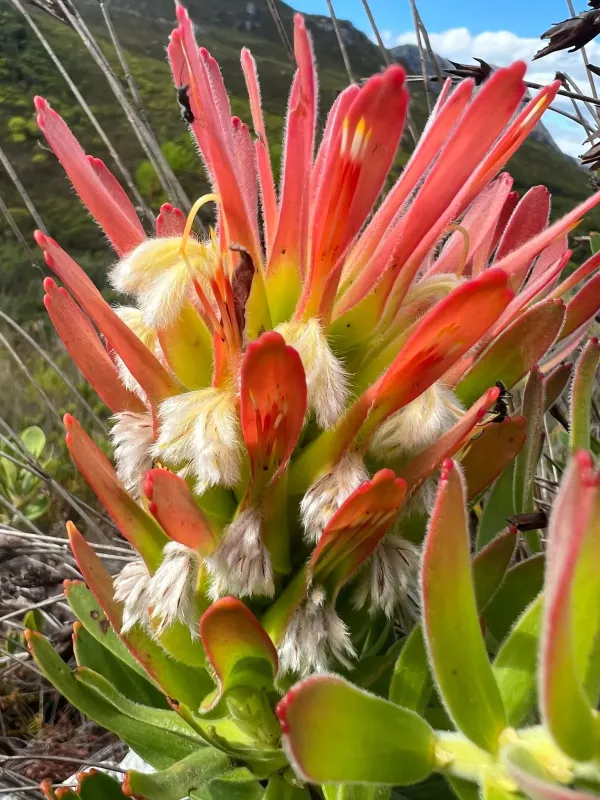
Description
Growing requirements
Mimetes cucullatus, commonly known as the common pagoda, belongs to the Proteaceae family and is native to the fynbos vegetation of South Africa. It is an evergreen shrub known for its architectural beauty and unique flowering structure.
The cultivation of this species requires a specific soil profile: acidic, nutrient-poor, and extremely well-draining. Because of its specialized root system, it is highly intolerant of phosphorus-rich fertilizers, which can be toxic to the plant.
Botanically, Mimetes cucullatus is characterized by dense, alternate leaves and small flower heads protected by vibrant bracts. These bracts act as a key adaptation for attracting nectar-feeding birds, which are essential for its pollination.
Climatic requirements involve full sun exposure and constant airflow. It thrives in regions with a Mediterranean climate, avoiding extremes of frost, which can damage the delicate terminal buds and reduce the visual quality of the crop.
In terms of economic use, Mimetes cucullatus is a highly valued cut flower in international floriculture markets. Its long vase life and striking appearance make it a premium choice for high-end floral designs and event decor.
Main diseases and pests
Root rot caused by Phytophthora species remains the primary threat to this crop. This pathogen thrives in waterlogged conditions, making proper soil drainage the most important preventive measure.
Insect pests, including aphids and scales, can colonize the soft tips of new growth, causing stunted development and reducing the overall quality of the stems intended for harvest.
Fungal infections such as powdery mildew can become problematic in humid environments with poor air circulation, necessitating strict control over greenhouse humidity levels.
Sensitivity to chemical pesticides is a notable characteristic of this species. Any treatment program must be carefully calibrated to avoid phytotoxicity that can lead to leaf scorch or plant death.
Biosecurity measures should be implemented to prevent the introduction of soil-borne pathogens into the planting area, as established infestations are nearly impossible to eradicate in field conditions.