
Lambertia orbifolia
Lambertia orbifolia
Description
Growing requirements
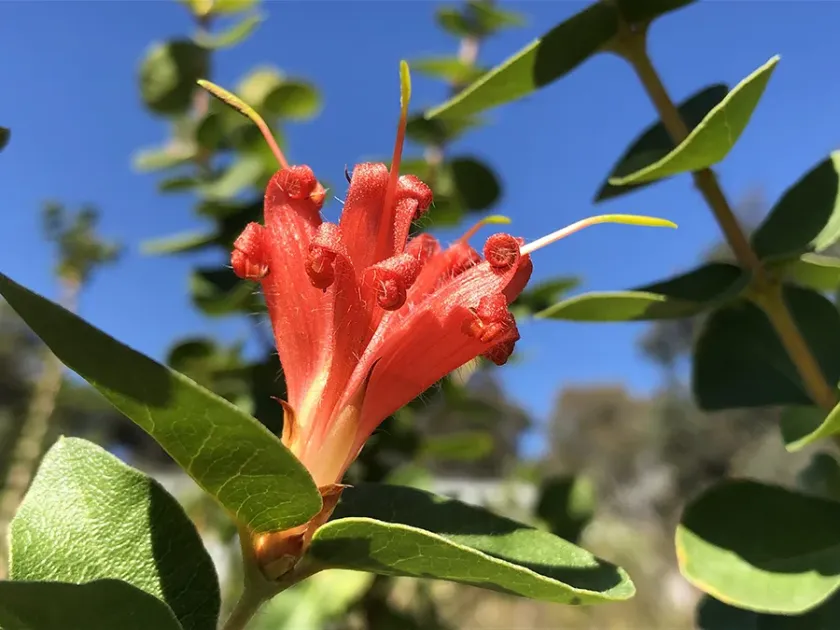
Lambertia orbifolia, commonly known as the round-leaved honey-flower, is a distinctive shrub belonging to the Proteaceae family. Native to the southwest region of Western Australia, this species is noted for its unique morphology and restricted natural distribution, often found in heathland ecosystems.
The plant features woody, sclerophyllous leaves that are nearly circular in shape, designed to conserve water in nutrient-poor, sandy environments. Its inflorescences consist of clusters of red, nectar-rich flowers that serve as a crucial food source for honeyeaters, playing a vital role in local pollination networks.
Successful cultivation requires specific soil conditions, prioritizing excellent drainage and a low-phosphorus environment. In agricultural settings, it is essential to replicate the natural sandy soil profile, as this plant is highly susceptible to phosphorus toxicity and poor aeration, which can rapidly lead to root decline.
Climate requirements for this species are centered around warm, dry summers and cool, wet winters. As an Australian native, it thrives in full sun exposure. Protection from excessive wind and stagnant moisture is necessary to maintain the plant's health and prevent the development of physiological disorders.
Management practices should be non-intrusive. Due to the sensitive nature of the root system, minimal disturbance is recommended after planting. Pruning should be handled with care to maintain the shrub's natural habit while ensuring that airflow remains adequate throughout the canopy.
Main diseases and pests
The most significant threat to Lambertia orbifolia is the soil-borne pathogen Phytophthora cinnamomi. This fungus causes severe root rot, and once introduced into the growing environment, it is extremely difficult to eradicate, necessitating strict quarantine and sanitation procedures.
Pests such as boring insects and various mite species can affect the vigor of the plant by damaging stems or foliage. While these are rarely fatal to established specimens, they can impact floral display and general plant health, requiring integrated pest management strategies tailored to native plant care.