
Mountain Devil
Lambertia formosa
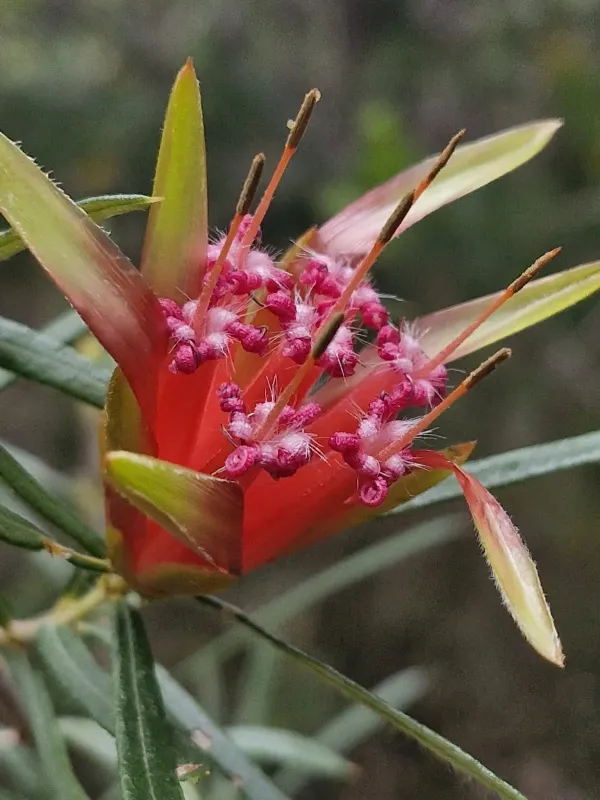
Description
Growing requirements
The Mountain Devil (Lambertia formosa) is a member of the Proteaceae family, native to the sandstone regions of New South Wales, Australia. This evergreen shrub is highly valued for its striking, nectar-rich red flowers.
Optimal growth requires well-drained, acidic, sandy soils. In garden settings, soil drainage is the most critical factor to prevent root rot, as the plant does not tolerate waterlogging under any circumstances.
The plant thrives in full sun but can adapt to partial shade. It is well-suited to the Mediterranean climate, displaying high drought tolerance once established due to its sclerophyllous, hardy leaf structure.
Nutritional management is distinct: as a member of the Proteaceae family, it has evolved to thrive in phosphorus-poor soils. Using standard fertilizers can be fatal; only specially formulated, low-phosphorus fertilizers should be used.
The plant grows as a multi-stemmed shrub reaching up to two meters in height. Its woody fruits, which resemble the head of a devil, provide the common name for the species and add unique texture to the landscape.
Main diseases and pests
The most severe biological threat to Lambertia formosa is the root-rot fungus Phytophthora cinnamomi, which thrives in moist soils and can destroy the root system rapidly.
Pest pressure often includes leaf-eating insects and sap-sucking pests like aphids, especially during the active growth flush in spring, which can stress the plant and facilitate secondary fungal infections.
Poor air circulation, particularly in containerized or greenhouse specimens, increases the risk of sooty mold growth on the foliage, which is often a secondary symptom of aphid infestations.
Stem borers can occasionally cause damage to older branches, weakening the structural integrity of the bush and providing entry points for wood-decay fungi.
Proactive management includes regular monitoring for yellowing leaves and ensuring that the planting site is elevated or sloped to promote water runoff, thereby reducing pathogen pressure.