
Dryandra nobilis
Dryandra nobilis
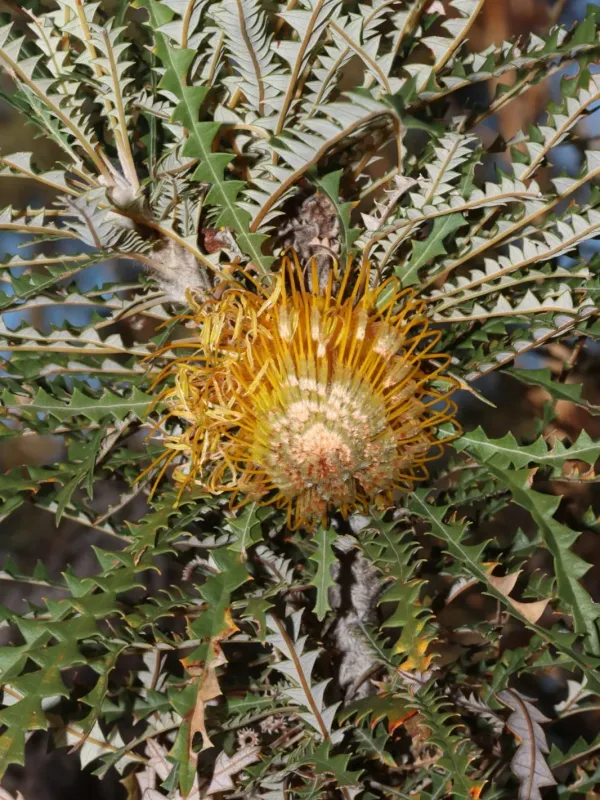
Description
Sowing dates
Propagating Dryandra nobilis requires patience and specific environmental control. Seeds should be sown in a coarse, well-draining medium that is devoid of added phosphorus, as this plant is highly sensitive to soil chemistry.
The optimal germination temperature mimics the natural seasonal changes, often requiring a period of heat during the day and cooler nights to break seed dormancy.
Sterility is paramount during the seedling stage to prevent fungal damping-off, which frequently occurs if the growing medium remains too damp for extended periods.
Seedlings develop slowly, establishing a complex root system that eventually supports the plant in harsh, nutrient-poor conditions typical of its native habitat.
Transplanting is discouraged after the root system has matured; therefore, using biodegradable pots that can be placed directly into the final growing site is recommended.
Growing requirements
Dryandra nobilis, a prominent member of the Proteaceae family, is endemic to the sandplains of Western Australia. It thrives in high-light environments with exceptional soil drainage.
This species is well-adapted to Mediterranean-type climates, characterized by dry, hot summers and cool, wet winters. Protection from severe frost is essential for plant longevity.
The soil should be acidic to neutral and exceptionally low in organic matter. Traditional garden fertilizers should never be used, as the plant's proteoid roots are specialized for extracting nutrients from very poor soils.
Adequate air circulation is mandatory, both around the root zone and the foliage, to prevent moisture-related pathogen outbreaks.
Watering should be deep but infrequent, allowing the soil profile to dry out significantly between applications to simulate the plant's native drought cycles.
Yield
While not a food crop, Dryandra nobilis is a high-value ornamental commodity in the cut flower and dried floral industry. Its structural inflorescences are prized for their longevity.
Commercial producers focus on managing the plant to maximize the density of floral stalks, which are harvested when fully mature and then carefully air-dried for decorative use.
The plant contributes to local economies through landscape design and specialized horticultural nurseries that cater to dry-garden enthusiasts.
The long-lasting nature of the dried flowers makes them a sustainable choice for interior designers, reducing the demand for short-lived, greenhouse-grown flowers.
Yield management requires careful pruning of spent flower heads to encourage new growth cycles without stressing the woody base of the shrub.
Main diseases and pests
The most significant threat to this species is root rot caused by Phytophthora cinnamomi, a pathogen that thrives in moist, poorly drained soil conditions.
Insect pests, including mealybugs and scale, can colonize the dense foliage, requiring manual removal or specialized horticultural oils rather than systemic chemicals.
High humidity combined with poor airflow can lead to leaf spotting and fungal growth, which compromises the aesthetic value of the foliage and inflorescences.
Nutrient toxicity, particularly from accidental exposure to phosphorus-rich runoff from neighboring fertilized plants, is a leading cause of mortality in cultivated specimens.
Preventative measures involve strict adherence to soil-moisture monitoring and ensuring that the planting site remains isolated from traditional irrigation systems.