
African almond
Brabejum stellatifolium
Description
Growing requirements
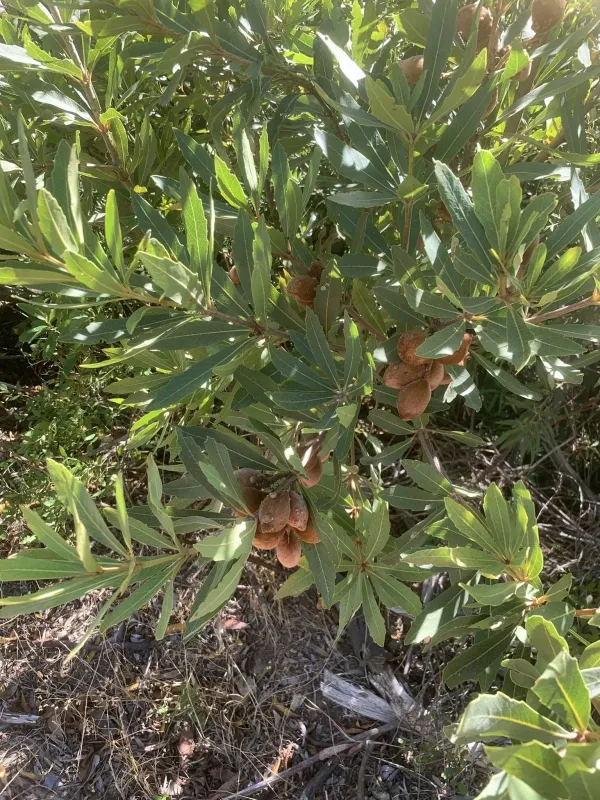
Brabejum stellatifolium, commonly known as the African almond or wild almond, is a prominent member of the Proteaceae family. It is a large, evergreen shrub or small tree native to the Western Cape of South Africa, typically reaching heights of up to 15 meters.
This species naturally inhabits moist, shaded areas near rivers and mountain streams. Its biological adaptation to these riparian zones makes water management a critical factor for successful cultivation, as the plant thrives in consistently moist but well-draining soil.
The soil requirements for Brabejum focus on acidic or neutral substrates that are rich in organic matter. Growers should ensure that the planting site has excellent drainage, as the roots are highly susceptible to stagnation and subsequent fungal decay in waterlogged conditions.
Regarding climate, Brabejum requires mild temperatures and is generally sensitive to severe frosts. The plant prefers regions that mimic the Mediterranean climate of its origin, providing steady moisture levels and moderate light intensity, often benefiting from shelter from prevailing winds.
The economic value of Brabejum stellatifolium lies in its seeds. Historically, these have been processed as a food source, often roasted or soaked to mitigate the presence of cyanogenic glycosides. Its unique flavor profile makes it a subject of interest for small-scale specialty agriculture.
Main diseases and pests
Root rot, particularly caused by Phytophthora species, remains the primary threat to the health of the African almond. Maintaining proper soil aeration and preventing water accumulation around the root crown are essential preventive measures.
Pests such as scale insects may periodically infest the foliage, particularly in confined growing environments. Regular monitoring of the underside of leaves and the application of horticultural oils can effectively manage such infestations without damaging the plant's delicate tissues.