
Aulax umbellata
Aulax umbellata
Description
Growing requirements
Aulax umbellata is a prominent member of the Proteaceae family, indigenous to the Cape region of South Africa. As a shrub, it has evolved in a Mediterranean-type climate with dry summers and mild, wet winters.
The crop requires highly specific soil conditions, specifically acidic, nutrient-poor, and well-drained soil. The root system is extremely sensitive to waterlogging, necessitating the use of sandy or rocky substrates to prevent root rot.
Sunlight exposure is critical for the healthy development of this species. It should be grown in full sun locations, as any shade can lead to leggy growth and significantly reduced flowering potential.
Temperature management is vital; the plant is frost-tender and requires greenhouse protection in non-native climates. Maintaining temperatures between 15°C and 25°C ensures optimal metabolic activity.
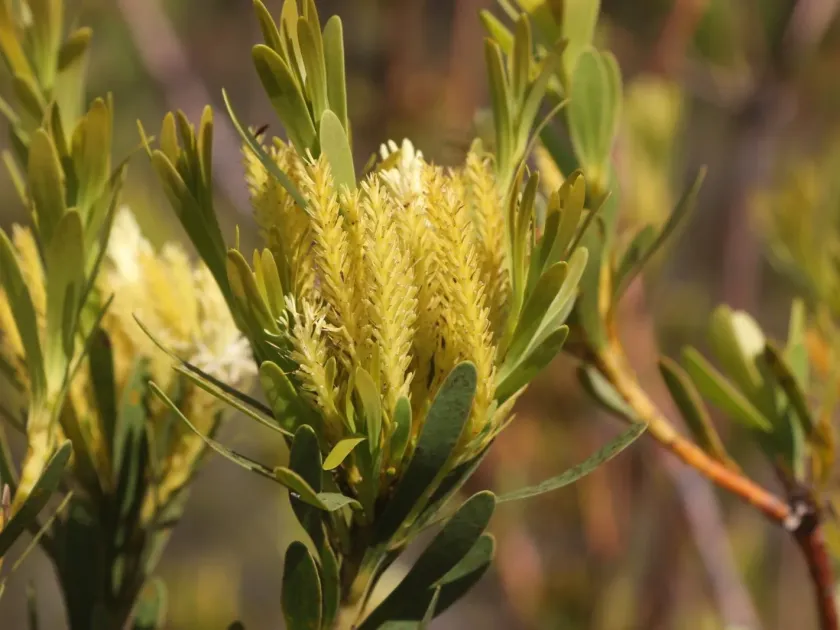
Botanically, it is a dioecious shrub, meaning male and female flowers occur on separate plants. The foliage is evergreen and leathery, while the inflorescences form distinctive umbels that provide significant ornamental value.
Harvesting
Aulax umbellata is primarily harvested for the cut flower industry. Its flowers are highly valued for their sculptural shape, unique texture, and exceptional vase life, making them a staple in high-end floral arrangements.
Harvesting takes place once the inflorescences are fully developed and vibrant in color. Professional harvesters use sterilized shears to make precise cuts, ensuring the plant remains healthy for future growth cycles.
Post-harvest handling involves immediate cooling to stabilize the blooms and minimize moisture loss. This step is essential for maintaining market quality during global export processes.
Pruning is an essential maintenance practice following the harvest season. Removing spent flower stems encourages the plant to put energy into lateral shoots, which will support next year's crop production.
The industry focuses on sustainable cultivation methods to preserve the natural longevity of these bushes, as they can produce high-quality yields for several years if managed correctly.