
Aulax pallasia
Aulax pallasia
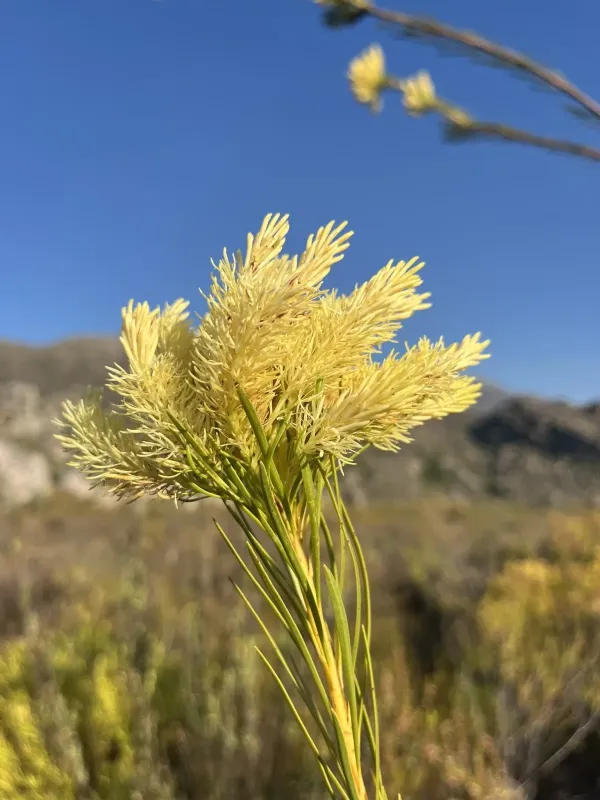
Description
Sowing dates
Aulax pallasia belongs to the Proteaceae family and is native to the fynbos vegetation of South Africa. Cultivation requires specialized knowledge of seed dormancy, as many species in this family rely on fire-related cues to trigger germination.
Sowing should take place in a well-draining, nutrient-poor substrate, primarily composed of sand and grit. It is critical to maintain a consistent temperature range between 15°C and 20°C to encourage healthy root development in the initial stages.
Seeds are sown shallowly and require a long germination period. It is often recommended to use smoke-infused water or seed primers to improve the uniformity of germination, as this is a common practice for Proteaceae propagation.
Once seedlings emerge, they should be kept in a bright, airy environment but shielded from harsh midday sun. Overcrowding in seed trays must be avoided to prevent damping-off disease, which is a frequent issue for young Proteaceae.
Potting up is a delicate operation. Because the roots are extremely sensitive to handling, it is best to use biodegradable pots or ensure the root ball is kept entirely intact during the transfer to larger containers.
Growing requirements
The climate requirements for Aulax pallasia are very specific, demanding a Mediterranean-style environment. It thrives in regions with wet, mild winters and dry, warm summers, making it highly dependent on greenhouse conditions in temperate climates.
The soil must be acidic and possess excellent drainage properties. Aulax pallasia has specialized proteoid roots that are highly adapted to extract nutrients from poor soils; therefore, adding standard fertilizers can be lethal to the plant.
High light intensity is mandatory for the plant to maintain its structural integrity and encourage flowering. Insufficient light levels lead to etiolated, weak growth that is prone to physical breakage and disease susceptibility.
Water quality is a key success factor. This species is intolerant of hard water and high mineral content, which can cause leaf burn and nutrient lockout. Using soft, filtered, or rainwater is the industry standard for this crop.
Proper air circulation is crucial to mimic the natural winds of its native habitat. Stagnant air leads to excessive humidity around the foliage, which invites fungal infections and pest colonization.
Main diseases and pests
Phytophthora root rot remains the most significant threat to Aulax pallasia. Once symptoms appear, the plant is usually beyond saving, underscoring the importance of strict moisture control and sterile growing media.
Pests such as mealybugs and scale insects often infest the dense foliage of the plant. Monitoring the leaf axils for these insects is essential, and manual removal is often safer than chemical applications for this sensitive species.
Powdery mildew may occur if the ventilation is insufficient or if local humidity fluctuates too rapidly. Cultural controls, such as thinning the canopy and ensuring maximum airflow, are the preferred methods of management.
The delicate proteoid root system is easily damaged by high concentrations of phosphorus in the soil. This often manifests as leaf chlorosis, which can be mistaken for a pest infestation or nutritional deficiency.
Regular sanitation, including the removal of spent flowers and dead leaves, is required to prevent the accumulation of fungal spores in the greenhouse environment, maintaining the overall health of the plant collection.