
Aulax cancellata
Aulax cancellata
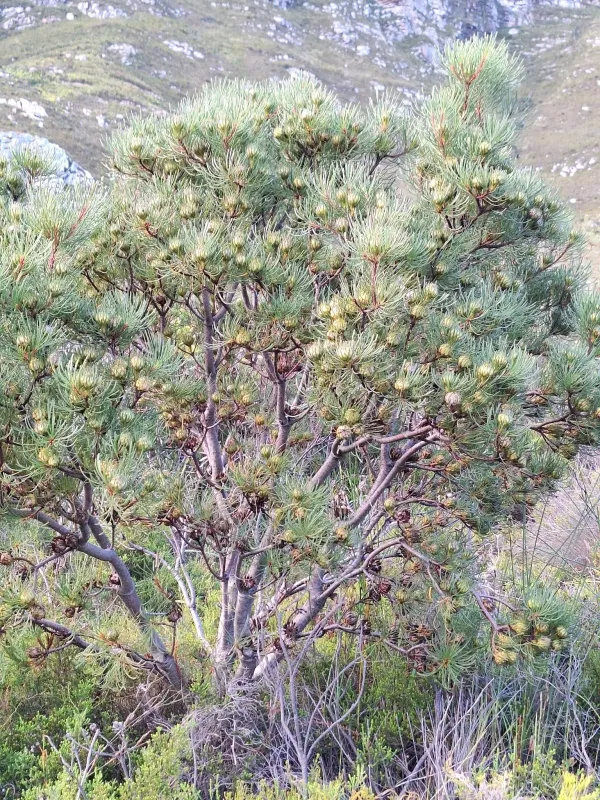
Description
Sowing dates
Propagation of Aulax cancellata is a delicate process requiring specific techniques to mimic natural germination triggers found in its native Cape habitat. Seeds often require smoke-water treatment to break dormancy.
The ideal sowing medium is a very loose, well-draining mixture of coarse sand and finely milled bark. Standard potting soil is typically too heavy and rich in nutrients for this species.
Maintaining a consistent, moderate temperature during the germination phase is essential. Rapid fluctuations in temperature can lead to high seedling mortality rates.
Once seedlings have developed their first true leaves, they should be transplanted with extreme care. The root system of Proteaceae is highly sensitive to disturbance.
Avoiding overwatering during the early stages of growth is critical. Seedlings are highly susceptible to "damping off" if the substrate remains saturated for too long.
Growing requirements
Belonging to the Proteaceae family, Aulax cancellata requires a unique environment characterized by acidic, nutrient-poor soil. These plants have evolved to thrive in soils where many other species would fail.
Phosphorus sensitivity is the most important factor in the cultivation of this species. Fertilizers must be low in or free of phosphorus, as excess levels can prove toxic to the plant's root system.
The plant demands high light intensity. In greenhouse settings, supplemental lighting may be required during shorter days to maintain plant vigor and prevent leggy growth.
Excellent air circulation is non-negotiable. Stagnant air environments often result in the rapid development of fungal pathogens, which can decimate an entire crop.
The climate should replicate Mediterranean conditions, with moderate winters and dry summers. High humidity levels combined with low temperatures are generally unsuitable for this plant.
Yield
Yield in Aulax cancellata is measured by the production of high-quality stems suitable for the florist trade. The economic output is driven by the density of flower heads and stem straightness.
Regular pruning is required to encourage the development of lateral shoots. This process directly increases the number of harvestable stems per individual plant over the season.
Proper spacing within the greenhouse or plantation ensures that each plant receives enough light, preventing the shading of lower branches which would otherwise reduce yield.
The productive life of a bush is typically several years. Proper irrigation management during the non-flowering period is vital for maintaining long-term productivity.
Technology, such as automated drip irrigation and greenhouse climate control systems, plays a crucial role in optimizing the yield of this sensitive botanical species.
Main diseases and pests
Root rot caused by Phytophthora species is the most significant threat to Aulax cancellata. It is almost always associated with poor drainage or overwatering practices.
Sucking insects, particularly aphids, can infest tender new growth, causing deformity in the developing leaves and flower heads, which renders them unsuitable for market.
Nutrient toxicity, specifically from incorrect fertilizer application, manifests as leaf burn or systemic chlorosis. Accurate soil pH monitoring is necessary to prevent these issues.
Spider mites can be a persistent problem in dry greenhouse conditions. Integrated pest management (IPM) is recommended to control populations without harming the sensitive plant tissues.
Equipment sanitation is vital. Pruning tools must be disinfected between every plant to prevent the mechanical transmission of systemic infections or viral pathogens.
Harvesting
Harvesting should be timed to when the inflorescences are fully developed yet fresh. A sharp, sterile blade is used to ensure clean cuts that heal quickly.
Harvesting is best performed in the early morning hours. This ensures that the plant stems have maximum turgor pressure, improving the vase life of the cut flowers.
Immediately after cutting, stems should be placed in clean water to prevent air embolism in the xylem vessels, which would block water uptake.
Post-harvest handling involves careful sorting to remove any damaged or diseased plant material, followed by immediate storage in a cool, ventilated environment.
Transporting the cut stems requires climate-controlled conditions to protect the delicate flower structures from the stresses of thermal fluctuations during shipping.