
Chinese primrose
Primula praenitens Ker Gawl.
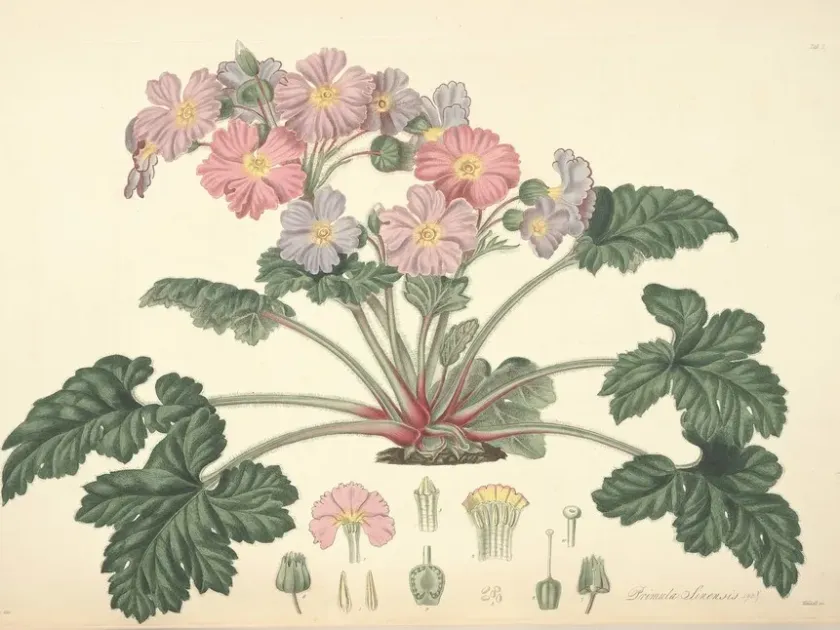
Description
Sowing dates
The Chinese primrose (Primula praenitens), belonging to the Primulaceae family, is a delicate ornamental plant traditionally grown as a houseplant or greenhouse culture. It is prized for its vibrant inflorescences and attractive foliage.
Sowing should take place between January and March. Seeds must be surface-sown on fine-textured, moist potting compost, as they are light-dependent for germination and should not be covered with a thick layer of soil.
Maintenance of stable conditions is critical, with temperatures kept around 18–20 degrees Celsius. High humidity is ensured by covering the containers with glass or plastic to create a mini-greenhouse environment until the seedlings emerge.
Pricking out occurs when the first true leaves appear, moving seedlings to individual pots. The soil must be light and well-drained to allow the delicate root system to establish without suffering from compaction.
Successful cultivation requires consistent attention to the plant's development stages. Growers typically refresh their stock every year to ensure robust plants that bloom profusely during the cooler seasons.
Growing requirements
As a mountain native, the Chinese primrose prefers cool conditions. It thrives at temperatures between 12 and 15 degrees Celsius. Exposing the plant to excessive heat will significantly shorten its flowering duration.
Bright, filtered light is ideal for this plant. Direct summer sun can lead to leaf scorching and rapid moisture loss, therefore positioning the plant near east or west-facing windows is highly recommended.
The potting medium should be a mixture of leaf mold, peat, and sand. A slightly acidic to neutral pH is optimal, and adequate drainage at the bottom of the pot is a strict requirement to prevent root saturation.
Watering must be done carefully, ideally from the bottom or along the edge of the pot, to prevent water from accumulating in the center of the rosette, which could trigger crown rot.
Maintaining high air humidity is essential. Using a tray with damp pebbles or an air humidifier nearby can help mitigate the drying effects of indoor heating systems during the winter months.
Main diseases and pests
Spider mites and aphids are the most common pests that affect the Chinese primrose. They thrive in dry indoor environments and can quickly infest a plant if left unchecked.
Root rot and grey mold (Botrytis) represent the most dangerous pathological threats. These are almost always caused by waterlogged soil and poor air circulation within the plant's immediate environment.
Integrated pest management, including regular inspection of the leaf undersides, is vital. Chemical intervention with appropriate pesticides should be performed at the first sign of an outbreak.
Preventative measures include avoiding overcrowding, which facilitates the spread of pests and diseases, and ensuring that all containers have effective drainage holes.
If a plant shows signs of fungal infection, it should be isolated immediately to protect the rest of the collection, and the humidity levels should be reduced until the soil surface dries out.