
Least primrose
Primula minima
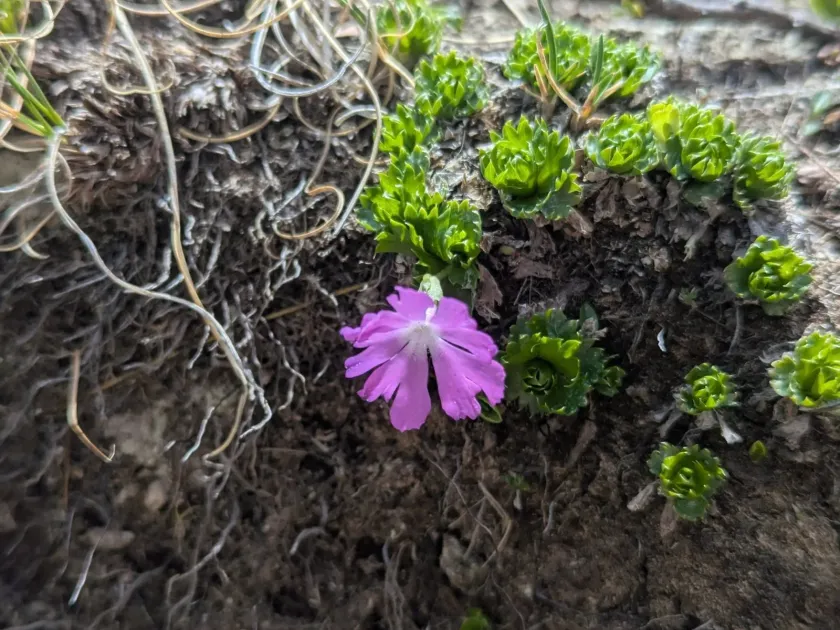
Description
Growing requirements
The Least primrose (Primula minima) is a dwarf perennial plant native to the high-mountain regions of Europe, including the Alps and the Carpathians. It belongs to the Primulaceae family and is well-adapted to extreme mountainous conditions.
Biologically, it is characterized by forming tight, low-growing rosettes of leathery leaves. The flowers are relatively large for the size of the plant, typically appearing in shades of pink, rose, or violet shortly after the snow melts in its native habitat.
Successful cultivation requires mimicking its natural habitat, which means providing cool temperatures, high light intensity, and excellent drainage. It is not a typical garden flower and demands specialized rock garden conditions to survive.
The soil should be gritty, acidic to neutral, and low in organic matter to prevent overly vigorous growth which can lead to structural weakness. Regular moisture is necessary during the growing season, but the root zone must never stay soggy.
This species is highly valued in the horticultural trade for specialized alpine gardening, rockeries, and stone trough displays. It serves as a iconic specimen for enthusiasts of mountain flora and high-elevation vegetation.
Main diseases and pests
The most common threat to the Least primrose is root rot, frequently caused by stagnant water or excessively rich potting soil that fails to drain efficiently.
Garden pests, especially slugs and snails, find the succulent leaves of the primrose attractive, often damaging the plant during the early growth stages in spring.
High temperatures combined with poor airflow can lead to fungal outbreaks, such as powdery mildew or various wilt pathogens that affect the plant's health.
Careful mulching with gravel is essential to prevent the foliage from sitting on damp soil, which is a primary method for reducing the incidence of rot-related issues.
Regular inspection is advised during humid weather to detect any signs of aphid infestation or insect damage on the developing buds before they negatively impact the bloom.