
Kiso Primrose
Primula kisoana
Description
Growing requirements
The Kiso Primrose (Primula kisoana) belongs to the Primulaceae family and is a distinctive herbaceous perennial. Native to the mountainous forest regions of Japan, this species is well-adapted to cool, humid environments with a high content of organic forest litter.
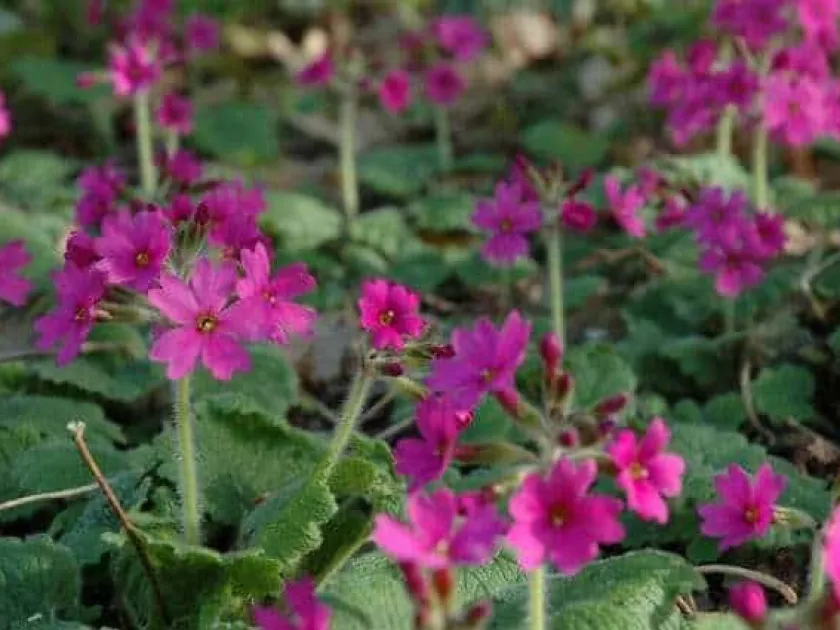
Botanically, the plant features pubescent, soft-textured leaves organized in a basal rosette and produces vibrant pinkish-purple flowers on scapes. Typically reaching heights of 15 to 25 centimeters, it is prized in ornamental horticulture for its ability to form dense, spreading clusters in shade gardens.
Cultivation requirements involve a loose, well-draining soil structure that retains moisture without becoming waterlogged. The pH should ideally be slightly acidic or neutral, mimicking the conditions of its natural forest habitat where nutrient availability is steady.
The Kiso Primrose thrives in partial shade, making it an excellent choice for woodland gardens or north-facing rockeries. Exposure to intense, direct midday sun should be avoided at all costs, as the plant is susceptible to foliage scorch and heat-induced wilting.
Climatic adaptability is relatively high, as the species is accustomed to mountainous winters. While it is hardy in temperate zones, gardeners should apply a light layer of organic mulch in late autumn to protect the root crown from drastic temperature fluctuations during winter.
Main diseases and pests
The primary threats to Primula kisoana include fungal diseases such as gray mold (Botrytis) and various leaf spots. These pathogens often thrive in conditions of poor air circulation and excessive humidity, emphasizing the need for proper spacing during planting.
Slugs and snails are major pests that find the succulent, soft foliage of the primrose particularly attractive. Control strategies often involve the use of copper barriers, physical traps, or environmentally safe molluscicides applied around the base of the plants.
Root rot remains a critical concern if drainage is not managed correctly. If the soil remains saturated for extended periods, the root system will quickly deteriorate, leading to the collapse of the plant; therefore, soil aeration is essential for long-term health.
Occasional infestations of spider mites can occur during hot and dry spells, necessitating regular inspection of the leaf undersides. Applying horticultural soaps or appropriate insecticides at the first signs of infestation can effectively prevent severe damage to the foliage.
Maintaining plant health involves diligent monitoring and prompt sanitation. By keeping the site free of decaying organic matter and ensuring the plants are not overcrowded, growers can minimize the risk of pest and disease outbreaks throughout the growing season.