
Jeso primrose
Primula jesoana
Description
Growing requirements
The Jeso primrose (Primula jesoana) is a perennial herbaceous plant belonging to the Primulaceae family. It is native to the forested mountainous regions of Japan, particularly Hokkaido, where it grows in cool and moist microclimates.
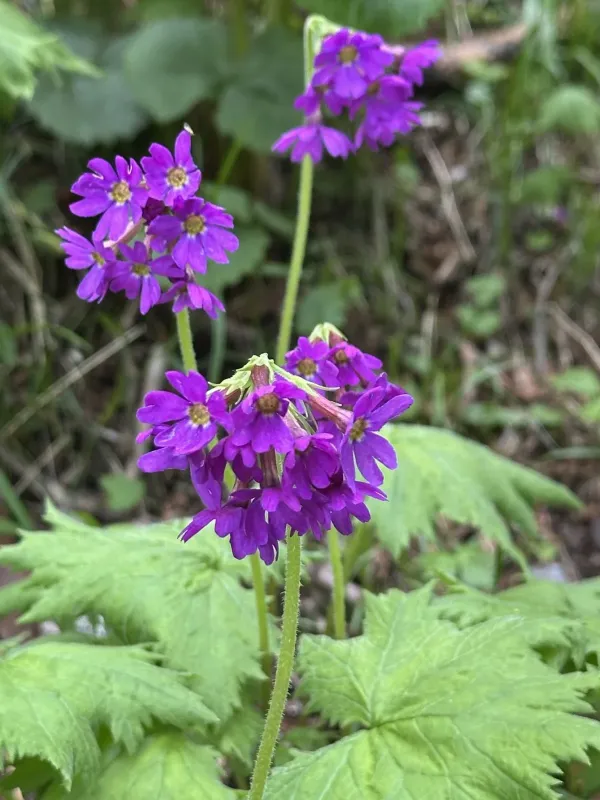
The plant is characterized by its distinct palmate-lobed leaves covered in fine hairs. It produces elegant stalks bearing clusters of rose-pink to violet flowers that bloom in the spring, making it a desirable ornamental species.
Cultural requirements involve planting in humus-rich, loose, and well-draining soil. It thrives in partially shaded environments, as the foliage is prone to scorching under intense direct sunlight. Adequate soil moisture is essential for its development.
Climate preferences lean toward temperate, cool summers and moist, mild winters. The species is well-adapted to woodland settings and requires protection from extreme drought or heat waves that could dehydrate the root system.
In terms of utilization, the Jeso primrose is primarily cultivated for ornamental purposes in rock gardens, woodland borders, and alpine-style landscaping where natural, humid conditions can be maintained.
Main diseases and pests
Slugs and snails represent the most significant pest threat to this culture, as they feed on the succulent leaves. Implementing physical barriers like crushed eggshells or copper tape can help protect the plants.
Fungal diseases such as botrytis (gray mold) often affect the plant if air circulation is insufficient. Pruning away damaged or decaying leaves is recommended to improve airflow and reduce humidity levels.
Root rot is a common issue caused by poor drainage during periods of high precipitation. Ensuring a sandy or loamy soil composition is critical to prevent the roots from becoming waterlogged.
Spider mites may appear during dry seasons, causing the leaves to yellow and wilt. Regular monitoring and overhead misting can help deter these small arthropods and keep the foliage healthy.
Integrated pest management strategies involve maintaining garden hygiene, avoiding overhead watering in the evening, and choosing appropriate spacing during planting to prevent the spread of soil-borne pathogens.