
Haller's Primrose
Primula halleri
Description
Sowing dates
Haller's Primrose (Primula halleri) is a perennial herbaceous plant belonging to the Primulaceae family. It is native to the mountain ranges of Central and Southern Europe, where it grows in high-altitude rocky environments and meadows.
Propagation is typically done through seeds. Due to their dormancy requirements, seeds need a period of cold stratification to germinate successfully. It is recommended to sow them in late autumn, allowing the natural winter cycle to trigger the germination process.
When starting indoors, use a well-draining, sterile potting mix. Keep the seeds barely covered with soil, as they require a small amount of light to stimulate germination. Consistent but not excessive moisture is key to success during the initial stages.
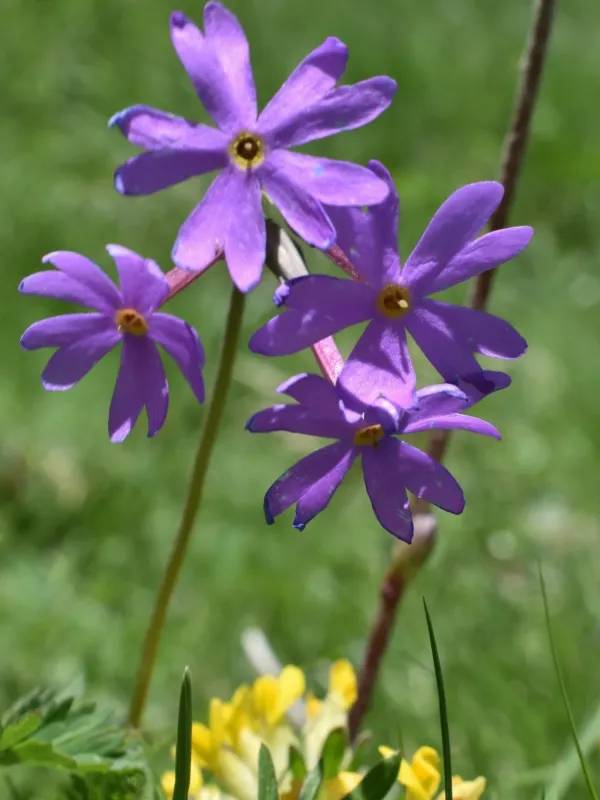
The plant grows in a basal rosette of narrow, lanceolate leaves often covered with a fine white mealy powder, a common feature in many alpine primroses. The flowering stalk rises from the center, carrying a cluster of vibrant lilac or pink blossoms.
Economically and ornamentally, this plant is highly valued for rock gardens, scree beds, and alpine troughs. It is a preferred species for collectors who seek to maintain authentic mountain-like conditions in their landscapes.
Growing requirements
Successful cultivation of Primula halleri depends on mimicking its natural habitat. The plant requires excellent drainage; if planted in heavy or waterlogged soil, the roots will quickly succumb to rot, leading to plant death.
Sunlight requirements vary by climate. While the plant loves light, it generally appreciates protection from the most intense afternoon heat, especially in lower-altitude areas where temperatures can rise significantly.
The soil should be neutral to slightly alkaline. Incorporating crushed limestone or gravel into the planting medium is a standard agronomic practice to improve soil structure and provide the necessary mineral balance for this species.
Water management is critical. During the growing season, keep the soil uniformly moist. However, in winter, the plant prefers a drier environment to prevent the crown from freezing while saturated with water, which is a major cause of failure.
Fertilization should be handled with care. A weak, balanced fertilizer applied sparingly in early spring is sufficient. Avoid high-nitrogen fertilizers that encourage excessive foliage growth, as this can weaken the plant's structural integrity.
Main diseases and pests
The primary threats to Haller's Primrose include fungal diseases such as botrytis and various root rots, which are triggered by stagnant water and high humidity. Good air circulation is the best preventive measure for these issues.
Pests, particularly aphids and spider mites, can become a nuisance. They often attack in dry, warm conditions, draining the sap from the leaves and weakening the plant's overall health and ability to produce blooms.
Slugs and snails can also cause substantial damage to the succulent leaves. Implementing protective barriers, such as copper tape or coarse grit around the plants, can significantly reduce the pressure from these mollusks.
Monitoring the plant for early signs of yellowing or distorted growth is essential. Early intervention with appropriate fungicides or organic pesticides can stop the spread of infection or pest infestation before it becomes terminal.
Maintaining a clean growing area by removing decaying leaves at the base of the rosette helps keep the plant healthy. This simple maintenance step reduces the chance of moisture buildup and pathogen development within the foliage.