
Primula concholoba
Primula concholoba
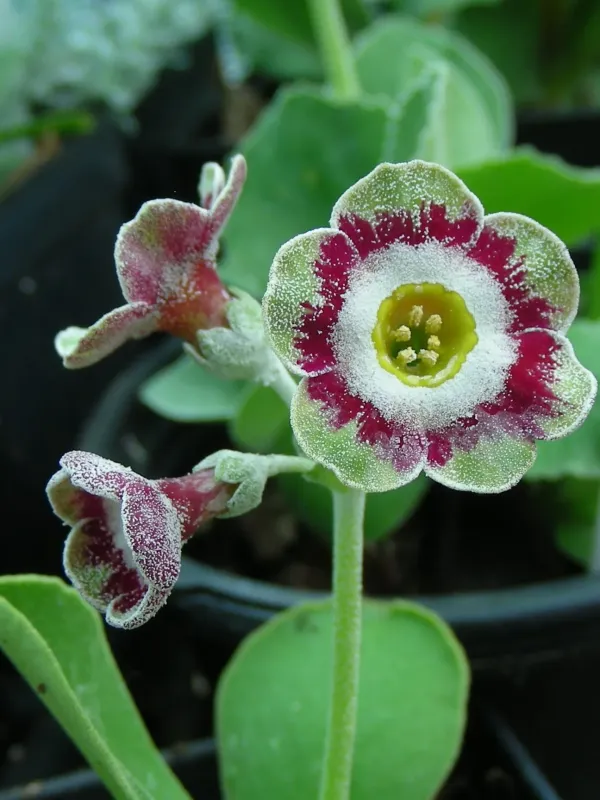
Description
Sowing dates
Seeds of Primula concholoba require cold stratification to break dormancy, making autumn or early winter the ideal time for sowing in temperate climates.
The containers should be kept at low temperatures, ideally around 0 to 4 degrees Celsius, for several weeks to simulate natural winter conditions.
A well-draining, peat-based sowing mix is essential to prevent waterlogging, which can easily kill the tiny, slow-growing seedlings.
Proper light management is necessary post-germination; seedlings should be moved to a bright, cool location but kept out of direct, intense sunlight.
Once true leaves have developed, seedlings should be carefully pricked out into individual pots to avoid competition and ensure healthy development.
Growing requirements
Primula concholoba belongs to the Primulaceae family and is native to high-altitude regions, where it thrives in cool, moist, and airy environments.
This species performs best in partial shade, mimicking its natural habitat where rocky slopes provide protection from direct midday solar exposure.
The soil should be rich in organic matter and possess a granular structure that allows for excellent drainage while maintaining consistent moisture levels.
High air humidity is beneficial for this plant, which is why it often succeeds in alpine-style gardens or near water features in cool zones.
Consistent, moderate fertilization during the growing season encourages robust foliage production and supports the formation of its characteristic flowers.
Main diseases and pests
Root rot is the most significant threat to Primula concholoba, usually triggered by poor drainage and excessive moisture during stagnant, humid periods.
Slugs and snails can cause severe damage to the foliage, especially in moist garden beds, necessitating regular monitoring and physical deterrents.
In greenhouses, insufficient air circulation can lead to outbreaks of powdery mildew, which quickly disfigures the plant's delicate leaves.
Pests such as aphids may occasionally cluster on the developing flower stems, weakening the plant and potentially spreading viral infections.
Maintaining a clean growing area by removing decaying plant matter helps to reduce the survival rate of fungal spores and common garden pests.