
Allioni's primrose
Primula allionii
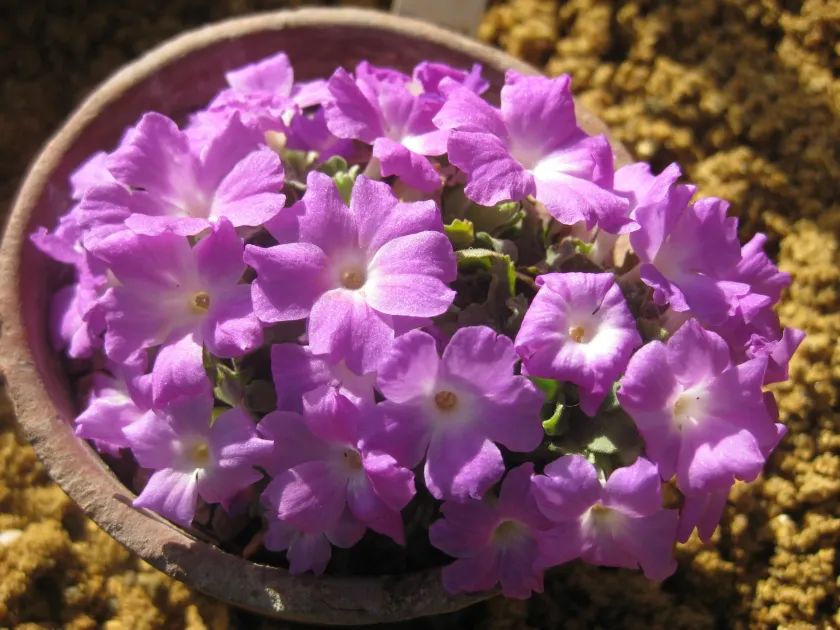
Description
Sowing dates
Sowing seeds of Primula allionii is recommended during the winter period, most often from January to February. For successful germination, the seeds require a stratification period lasting from 4 to 6 weeks at low temperatures.
Seeds are sown in shallow containers with a lightweight substrate, not buried deep, as they need access to light. It is important to maintain stable moisture levels until the first seedlings emerge.
After germination, the seedlings are gradually acclimatized to natural light conditions. Pricking out young seedlings is performed when they have formed their first pair of true leaves.
Young plants are transplanted into the open ground or rock gardens in spring once the threat of night frost has passed, ensuring sufficient space between bushes for proper air circulation.
Vegetative propagation of Primula allionii via division or cuttings is best carried out after the active flowering period has ended.
Growing requirements
Primula allionii is a miniature perennial plant from the Primulaceae family, endemic to the Maritime Alps. In nature, it grows on steep limestone cliffs, which determines its specific agronomic requirements.
The plant prefers moderate lighting without exposure to direct midday sun. Ideal garden locations are areas with eastern or north-eastern exposure, protected from excessive summer overheating.
The soil must be stony, well-drained, and contain a significant amount of lime. Water stagnation at the roots is fatal for this species, so installing effective drainage is a mandatory condition during planting.
The crop is extremely sensitive to excess moisture during the winter. When grown in open soil, protective glass or plastic covers are often placed over the plant to prevent precipitation from entering the leaf rosette.
The optimal temperature regime for the plant is cool and fresh air. In hot climates, Primula allionii requires additional shading and monitoring of air humidity.
Main diseases and pests
The greatest threat to Primula allionii is fungal diseases caused by excessive humidity and poor ventilation. Root rot is a common consequence of stagnant water in the substrate.
Grey mold can affect the leaf rosette during high air humidity and a lack of proper airflow around the plant.
Pests such as aphids and spider mites can damage the leaves during hot and dry weather. Regular inspection of the plants allows for the timely detection of insect colonies.
Slugs and snails show significant interest in the fleshy leaves of the primrose, especially in the spring. It is recommended to install protective barriers around the planting area to deter these pests.
- Ensuring perfect drainage.
- Using preventive fungicides during high humidity.
- Regular removal of withered leaves from the rosette.