
Swamp loosestrife
Lysimachia terrestris
Description
Growing requirements
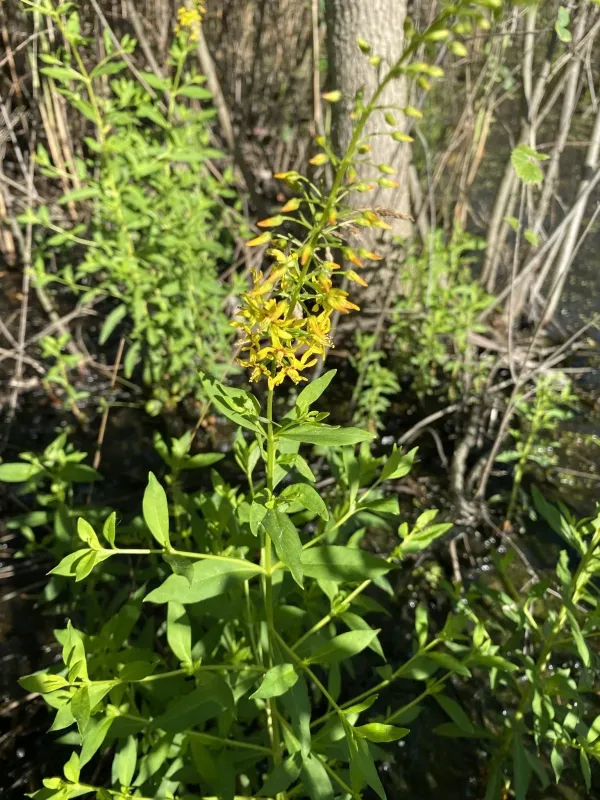
Swamp loosestrife (Lysimachia terrestris) is a member of the Primulaceae family. Native to North America, this perennial plant is typically found in moist environments, including swamps, marshes, and the edges of ponds, highlighting its preference for consistent saturation.
To cultivate this species successfully, it is essential to provide consistently moist to wet soil. While it can handle periodic flooding, it is equally important that the soil remains nutrient-rich to support its upright, leafy stems and long racemes of yellow flowers.
The plant thrives best in full sun to partial shade. In environments with adequate water, it can grow aggressively, making it a reliable choice for stabilizing soil on banks or in areas where standard ornamental garden plants might struggle with drainage issues.
One of the unique biological features of this plant is the production of bulbils, or small tubers, in the leaf axils. These structures serve as an effective means of asexual reproduction, allowing the plant to spread horizontally and colonize damp areas quite efficiently.
In landscaping, swamp loosestrife serves both aesthetic and functional purposes. It provides a naturalistic look for water gardens and can be used to prevent erosion along shoreline areas due to its fibrous, spreading root system that helps anchor the soil.
Main diseases and pests
Common diseases affecting this species include various leaf spot pathogens and powdery mildew, especially when humidity is high and airflow between plants is restricted. Proper spacing is necessary to maintain foliage health throughout the growing season.
Pests such as aphids and spider mites can occasionally infest the foliage, particularly during warmer, drier spells of weather. Monitoring the undersides of leaves is recommended for early detection and manual control or appropriate horticultural treatment.
Root rot can become an issue if the water becomes completely stagnant for too long in containers, despite the plant's love for moisture. Ensuring a light flow or turnover of water in pond margins helps keep the root zone oxygenated.
Weed management should be conducted manually to avoid disturbing the shallow roots. Since the plant tends to spread, it is often necessary to delineate the growing area with physical barriers to prevent it from outcompeting neighboring vegetation.
To minimize disease pressure, sanitation is key. Remove any decaying plant matter at the end of the season to eliminate overwintering sites for insects and fungal spores, ensuring a clean start for new growth in the following spring.