
Blue pimpernel
Lysimachia foemina
Description
Sowing dates
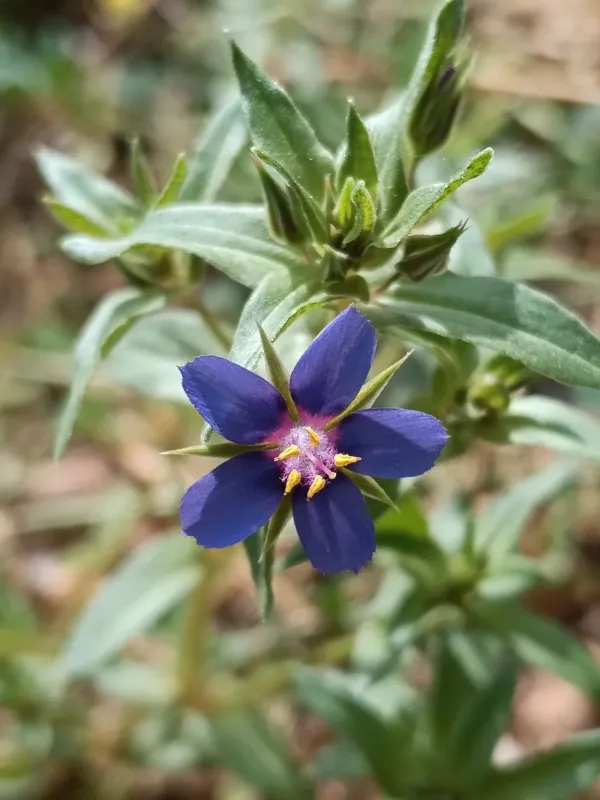
The blue pimpernel (Lysimachia foemina, formerly Anagallis foemina) is a herbaceous plant belonging to the Primulaceae family. While not a commercial crop, it is a significant weed species in agricultural settings, often appearing in cereal fields and fallow lands throughout Europe and surrounding regions.
Propagation occurs primarily through seeds, which exhibit high viability and can persist in the soil bank for several years. Germination typically begins in early spring, triggered by rising soil temperatures and moisture, allowing the weed to emerge alongside spring-sown crops.
The timing of emergence depends heavily on the depth of the seeds in the soil. Seeds buried deeper than a few centimeters may remain dormant until subsequent tillage operations bring them closer to the surface, creating staggered germination cycles.
In agricultural practice, early tillage or mechanical weeding is essential to disrupt the initial flush of seedlings. By timing these operations before the crop reaches a critical growth stage, farmers can effectively reduce the population density of this competitive species.
The species demonstrates a high degree of plasticity, capable of germinating both in autumn for winter crops and in spring for summer crops. This versatility makes it a persistent issue that requires constant monitoring and integrated management strategies throughout the growing season.
Growing requirements
Lysimachia foemina thrives in temperate climates and is commonly found in fertile, well-drained soils. It exhibits a preference for neutral to slightly alkaline pH levels, which often coincides with the optimal conditions for major agricultural crops, leading to direct competition.
Light availability is a crucial factor for the development of the blue pimpernel. As a sun-loving plant, it struggles to grow in shaded conditions created by a dense crop canopy, which highlights the importance of fostering vigorous crop growth to naturally suppress the weed.
Moisture requirements are moderate. The plant is resilient enough to withstand short periods of dryness, though it prefers consistent moisture levels during its initial vegetative growth phases. Adequate irrigation in cultivated areas often benefits this weed as much as the crop.
Soil structure plays a significant role in the weed's colonization. It tends to flourish in fields where soil structure is loose and well-aerated, whereas compacted soils can act as a natural barrier to the proliferation of its shallow root system.
Effective management includes nutrient management programs that prioritize crop vigor. By providing balanced fertilization, farmers encourage rapid crop establishment, which limits the available space and nutrients for the pimpernel to establish itself successfully.
Main diseases and pests
While the blue pimpernel is a weed, it is not immune to biological threats. Fungal pathogens, including powdery mildew, can colonize the foliage during periods of high humidity and stagnant air, reducing the overall vitality of the plant and its competitive capacity.
Insect pests, such as aphids, frequently target the succulent stems and leaves of the plant. These infestations may stunt the growth of individual plants, though they rarely provide sufficient pressure to eliminate the weed population from a field entirely.
The most significant threat to Lysimachia foemina in an agricultural context is chemical intervention. Selective herbicides are highly effective in controlling this species, provided they are applied during the sensitive vegetative growth phase before flowering and seed production.
Mechanical destruction is another vital management technique. Shallow harrowing and inter-row cultivation effectively uproot the plants and disrupt their ability to photosynthesize, leading to their rapid desiccation and death under sunny conditions.
Integrated weed management remains the best defense. By combining crop rotation, competitive planting densities, and targeted weeding, farmers can keep the populations of this plant well below the economic injury level, ensuring the productivity of the main agricultural crop.