
Cyclamen pseudibericum
Cyclamen pseudibericum
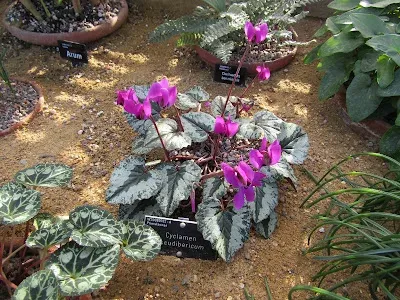
Description
Sowing dates
Cyclamen pseudibericum is a tuberous perennial belonging to the Primulaceae family. Propagation is primarily achieved through seeds, which should be sown soon after maturity to maintain optimal germination rates.
The seeds are best sown in late summer in a well-drained, humus-rich potting mix. Covering the seeds with a thin layer of soil is essential, as they require total darkness to germinate successfully during the initial stages.
Maintenance of cool temperatures (around 12-15°C) is critical for germination. Providing consistent moisture without waterlogging the soil allows the tubers to develop properly during the first months of growth.
Seedlings develop slowly, usually forming their first true leaves a few months after germination. Care must be taken not to disturb the root system during the first year, as these young plants are highly sensitive to transplanting shock.
Reaching flowering maturity usually takes 3-4 years from the date of sowing. Consistent care throughout the initial development phase is the key to ensuring robust growth and eventual bloom in future seasons.
Growing requirements
Native to the mountain forests of southern Turkey, this species thrives in cool, shaded conditions. In a garden setting, it should be planted in locations that mimic the moist, protected environment under deciduous trees.
Soil requirements include excellent drainage, a neutral to slightly alkaline pH, and a high amount of organic matter such as leaf mold. Heavy soils should be amended with perlite or grit to prevent moisture retention.
Climate adaptability is limited; the plant requires a cool dormant period during the hot summer months. During this time, it should be kept dry and sheltered from direct sun to prevent the tuber from desiccating or rotting.
Watering should be focused on the soil surface rather than the crown of the plant. During the active growing season, the soil should remain slightly moist, but never soggy, to support the development of foliage and flowers.
Winter protection is advisable in climates where temperatures drop significantly below freezing. A layer of organic mulch around the plant base helps insulate the tuber and protects it from severe frost damage.
Main diseases and pests
Grey mold (Botrytis cinerea) is a common fungal threat when ventilation is poor or humidity levels remain excessively high. Improving airflow and removing dead foliage are essential preventative measures against this pathogen.
Cyclamen mites are a major pest that can cause severe deformation of new leaves and flower buds. Early detection is vital, as these microscopic pests spread quickly and are difficult to eradicate once established.
Snails and slugs can cause significant damage to the plant, especially in damp conditions. Using barrier methods like crushed eggshells or copper tape can protect the vulnerable leaves from mollusk feeding.
Root rot caused by stagnant water is perhaps the most lethal threat to this species. Because the tubers can store water, over-watering quickly results in tissue decay, which is often irreversible if not detected early.
Regular sanitation of the growing area helps reduce the pressure from common soil-borne diseases. Ensuring that the plant receives adequate light without direct sun also maintains its vigor and natural disease resistance.