
Cyclamen mirabile
Cyclamen mirabile
Description
Growing requirements
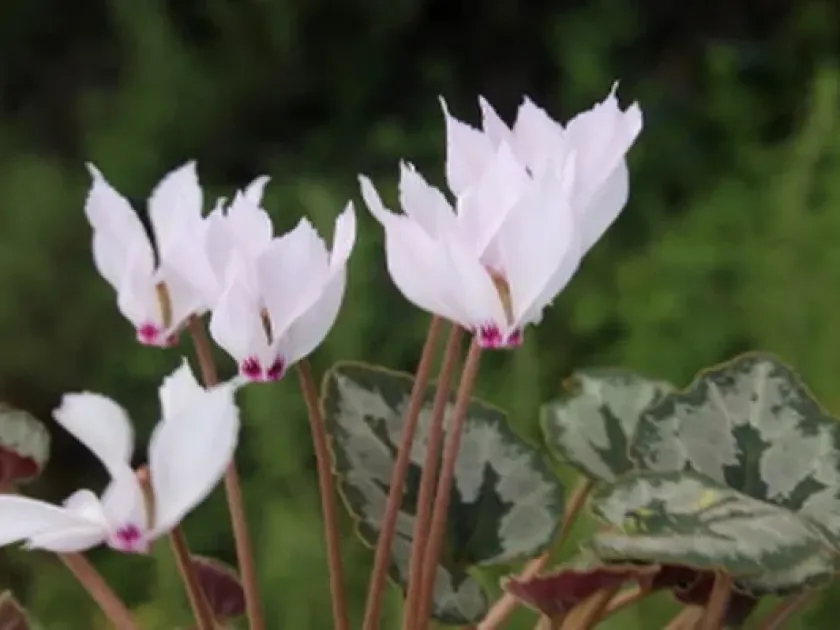
Cyclamen mirabile is a perennial tuberous plant belonging to the Primulaceae family. Native to the southwestern regions of Turkey, it primarily grows in rocky environments and shaded woodland areas, exhibiting unique adaptation to its natural habitat.
The plant requires well-drained, lime-rich soil to thrive. In cultivation, it is essential to prevent moisture accumulation around the tuber, as this is the most common cause of failure. It is typically suited for rock gardens, cold frames, or greenhouses.
Botanically, it is known for its distinct leaves with serrated edges, which often display a decorative silver pattern. The young foliage frequently emerges with a beautiful reddish or bronze coloration, adding ornamental value before the autumn blooming period.
This species is well-adapted to a Mediterranean climate, characterized by mild, wet winters and dry, warm summers. Growers must provide a distinct summer dormancy period where the tuber is kept dry to ensure successful flowering in the following autumn.
Agricultural management includes ensuring moderate soil acidity and providing sufficient light during the growing season. While not fully hardy in extremely cold regions, it can be grown in containers provided they are kept frost-free during the dormant stage.
Main diseases and pests
Fungal diseases, specifically Botrytis cinerea (gray mold), are the primary threat to the health of Cyclamen mirabile. This is particularly prevalent in greenhouses where air circulation is insufficient and humidity levels remain high.
Tuber rot, often caused by Fusarium or Pythium species, occurs when drainage is inadequate. This condition is frequently irreversible, emphasizing the importance of preventative measures such as using sterile potting mixes and proper pot spacing.
Pest management should focus on monitoring for root mites and thrips. These pests are notoriously difficult to detect until significant damage has occurred, often resulting in stunted growth and discolored foliage that compromises the plant's vitality.
In outdoor settings, slugs and snails can severely damage the foliage during the wet autumn and spring months. Implementing physical barriers or organic molluscicides is recommended to protect the tender plant structures.
Maintaining a high level of hygiene in the growing environment is essential. Regularly removing dead or decaying leaves prevents the spread of pathogens and ensures that the tuber remains robust for the next growth cycle.