
Balearic cyclamen
Cyclamen balearicum
Description
Growing requirements
The Balearic cyclamen (Cyclamen balearicum) is a perennial herbaceous plant belonging to the Primulaceae family. It is native to the Balearic Islands and parts of southern France, typically found in shaded, sheltered habitats where the microclimate remains stable.
Successful cultivation requires soil that is well-draining, humus-rich, and slightly alkaline or neutral. The structure of the substrate is vital to ensure that the corm remains healthy and free from rot throughout the growing season.
The plant thrives in cool to moderate temperatures, ideally between 12°C and 18°C. Because it originates from Mediterranean environments, it requires protection from severe frost and intense summer heat, making it an excellent candidate for alpine houses or greenhouses.
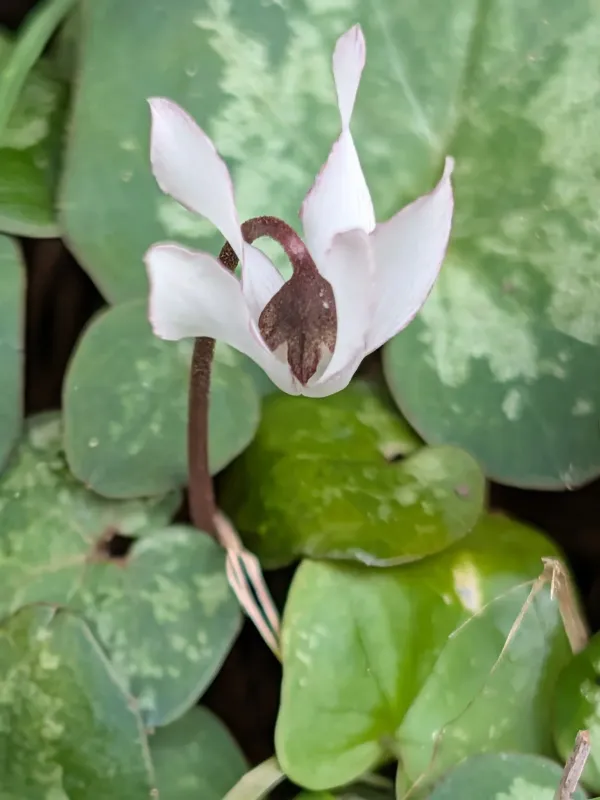
Botanically, it is distinguished by its mottled, heart-shaped leaves and delicate, fragrant white flowers that bloom in early spring. The corm remains dormant during the hot, dry summer months, at which point watering should be strictly withheld.
When grown in containers, it is essential to allow the soil to partially dry out between waterings, as constant moisture leads to rapid decline and tuber decay. Proper air circulation around the foliage is also a key factor in promoting healthy growth.
Main diseases and pests
The most common threats to the Balearic cyclamen are fungal infections, particularly Gray Mold (Botrytis), which can decimate the leaves and flower stalks in high-humidity conditions without adequate airflow.
Pests such as the cyclamen mite present a significant challenge. These microscopic pests feed on the growing points of the plant, causing stunted leaves and distorted blooms, which severely impact its ornamental value.
Thrips are another common pest that thrives in dry conditions. Their feeding leaves silvery streaks on the leaves, which can serve as entry points for secondary bacterial or fungal infections.
Preventative measures include the use of sterilized potting mixes and the maintenance of a rigorous hygiene protocol when handling the corms. Avoiding overhead watering is crucial to prevent the accumulation of moisture in the leaf axils.
In the event of an infestation, early intervention with appropriate acaricides or systemic insecticides is necessary to save the plant. Maintaining consistent conditions helps the plant build natural resistance to common pathogens.